Switching to Clash of Clans Means Rebuilding How You Play
May 22, 2026
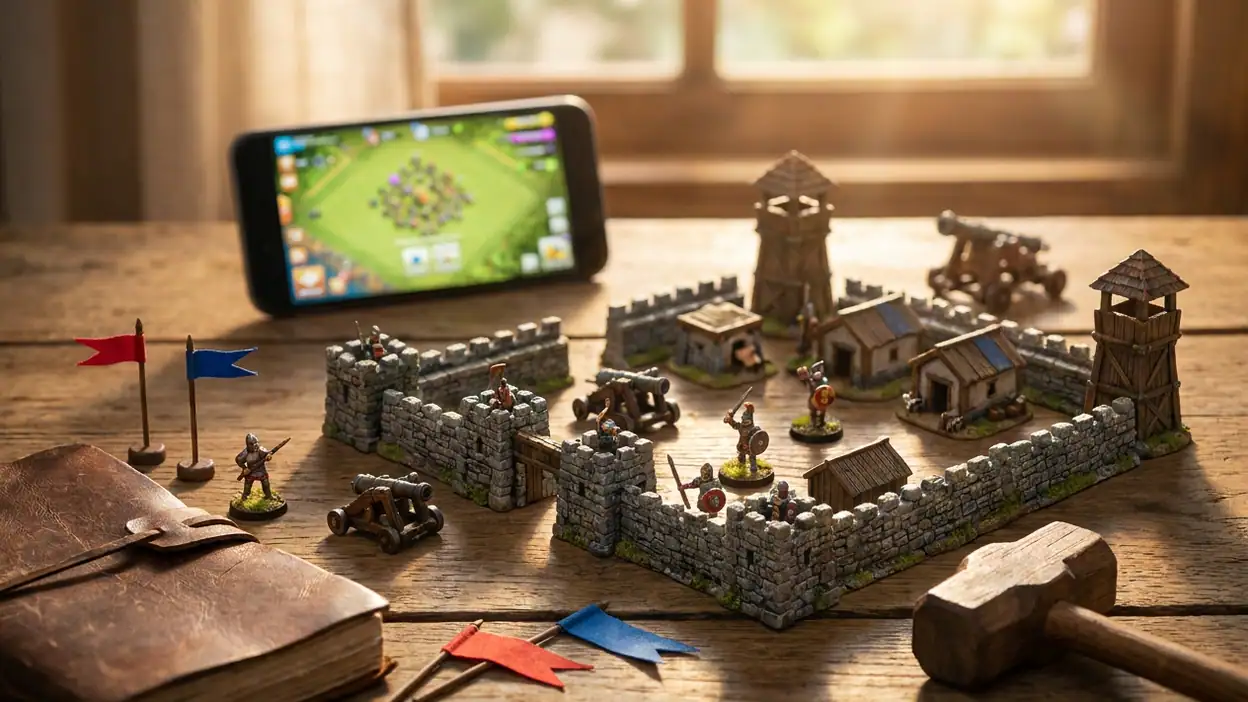
Switching to Clash of Clans is not a simple matter of finding a new village and pressing the attack button. The real change happens in your habits. If you are coming from Clash Royale, Lords Mobile: Kingdom Wars, or Evony: The King's Return, you already understand timers, upgrades, guild politics, and the satisfaction of watching a small settlement become a serious power. What changes here is the shape of your attention: attacks are deliberate rather than constant, defense is built into the layout, and progress depends on making good decisions before you commit resources.
After spending time with the game, my view is fairly clear. Clash of Clans is worth switching to if you want a strategy game with a measured rhythm, meaningful base design, and battles that reward preparation more than frantic activity. It is not the right move if your favorite part of a rival is nonstop combat, large-scale diplomacy, or the feeling that every spare minute can produce another meaningful fight. The game has a strong identity, and that identity becomes obvious within the first few sessions.
Why Consider Switching?
The first reason is focus. Many mobile strategy games spread your attention across several systems at once: multiple currencies, commander rosters, alliance events, world maps, research trees, and recurring tasks. Clash of Clans has plenty of depth, but its central question stays remarkably legible: how should I improve this village so that my next attack is stronger and my defenses are harder to break?

That clarity is refreshing if your current game has become a second job. You still have timers and daily decisions, but the village gives those decisions a visible shape. You can see the walls you need to rearrange, the defenses waiting for an upgrade, and the army composition you are testing. Progress feels less like filling a spreadsheet and more like renovating a fortified settlement one practical improvement at a time.
The second reason is the quality of its attack loop. You train an army, scout a target, choose an entry point, deploy troops, and then manage the consequences of that opening move. The best attacks are not just displays of power. They are small plans unfolding under pressure. A well-placed spell can rescue a shaky assault, while a careless deployment can leave an otherwise excellent army wandering around the wrong side of a base.
Players leaving Clash Royale may especially appreciate the greater sense of preparation. Clash Royale gives you immediate, repeatable matches built around a compact deck and short bursts of pressure. Clash of Clans asks you to shape the conditions of the battle before it begins. Players leaving Lords Mobile or Evony may appreciate the cleaner focus, but they should expect less emphasis on a giant political map and more attention to individual raids, village layouts, and clan coordination.
The Habit That Changes First
The first habit to change is your definition of a successful session. In a faster game, success often means playing another match. In Clash of Clans, a good session may involve collecting resources, starting one upgrade, adjusting a few traps, scouting targets, and deciding not to attack until your army is ready. That can feel strangely passive at first, especially if you are used to constant battles or an endless list of alliance tasks.
The game rewards a rhythm of preparation, action, and recovery. You prepare troops and spells, attack when the army is complete, spend the loot on a meaningful improvement, and then return later to repeat the cycle. Once that rhythm settles in, the waiting stops feeling empty. It becomes part of the strategy. You are not merely waiting for a timer; you are choosing which timer matters most.
That change also affects how you treat resources. It is tempting to spend every available coin or drop of elixir as soon as you have it. But a better player learns to think one or two upgrades ahead. If a major building is nearly affordable, a small purchase elsewhere may delay the plan that matters more. The village gradually teaches patience through opportunity cost rather than through a lecture.
There is another adjustment: defeat is less personal than it first appears. Your village will be attacked while you are away. Someone will take resources. A layout that looked clever may collapse in seconds. The important question is not whether you can prevent every loss, because you cannot. It is whether your overall economy and upgrade plan continue moving forward. That broader perspective is essential for anyone coming from a game where a single lost match feels more final.
Setup and Migration Facts
There is no general magic button that turns a village from another strategy game into a Clash of Clans village. Your progress, buildings, troops, and collection systems are specific to this game. Switching means starting a new progression path, learning its rules, and building your account within its own ecosystem. That sounds obvious, but it is the most important migration fact because it prevents the wrong expectation: you are changing games, not transferring a developed kingdom.
Before installing, make sure you know which account system you want to use and keep your sign-in details consistent. Clash of Clans supports account management through the services provided for the game, but the practical rule is simple: connect your new village to a reliable account early, and do not treat an unconnected early session as a permanent setup. If you play on more than one device, verify that your village loads correctly before investing serious time.
The initial setup is easy enough, but the first few hours can create confusion because the game introduces systems in stages. Buildings unlock gradually, troop options expand over time, and the village looks simple long after you have already made decisions that affect your future efficiency. Do not rush through every prompt just to reach the next feature. The early period is the safest place to learn how buildings, army camps, resource storage, and defensive range interact.
The practical migration cost is therefore measured in time, not files. You will not be importing a roster from Lords Mobile or carrying a deck from Clash Royale. You will be rebuilding familiarity from scratch. The good news is that the opening progression is designed to make that process manageable. The less good news is that experienced strategy players may find the early tutorial structure slower than expected.
The Relearning Cost
The largest learning curve is not the list of troops. It is understanding why an attack succeeds or fails. At first, it is easy to blame troop strength. In practice, the decisive factors are usually timing, pathing, target selection, deployment order, and whether your army composition actually suits the base in front of you.
Troops do not simply march toward the most valuable building. Their targeting preferences shape the entire attack. A unit that prioritizes defenses can open a route, while another may ignore the route you intended and drift toward an exposed structure. This makes deployment feel closer to directing a small operation than dropping a collection of powerful pieces onto a map.
Spells add another layer of judgment. A healing spell used too early may expire before the main force reaches danger. A jump spell can create a route that your troops still fail to use if the surrounding buildings pull them away. You learn through repetition, but the repetition is useful because each failed attack usually leaves a visible lesson.
Base design takes time to understand as well. A good layout is not simply a tight cluster of buildings. It has to protect important defenses, disrupt enemy pathing, separate valuable targets, and make the attacker spend time and troops reaching the core. The best layouts create awkward choices. They do not guarantee safety, but they make a clean attack harder.
Clan life is another area where expectations matter. Clans can provide donations, advice, social energy, and coordinated events, but the quality of that experience depends heavily on the group you join. A quiet clan can make the game feel solitary. An active clan can turn routine upgrades into a shared project. Finding the right community is part of switching, and it may take more than one attempt.
What Improves Immediately
The immediate improvement is coherence. Clash of Clans rarely feels as though its village, army, and attack systems belong to separate games. Your buildings support your army, your army determines your raids, and your raids pay for the next round of improvements. The loop is familiar, but the connections between its parts are unusually easy to read.
Base building also becomes more satisfying once you stop treating it as decoration. Moving a wall segment can change the route of an entire attack. Shifting a defensive building can protect a storage area while exposing another target. Even when a layout fails, the result gives you information. You can watch the replay, see where the attacker entered, and make a specific adjustment rather than simply replacing a generic defense.
The attack interface is another strength. It is approachable enough for a new player, but it leaves room for precision. You can begin with broad troop drops and gradually learn funneling, timing, spell placement, and coordinated entries. The game does not require lightning-fast reflexes, yet it still creates pressure because deployment decisions cannot always be undone.
Progression feels more tangible than in many sprawling kingdom games. A new army camp changes what you can bring. A stronger laboratory level opens new possibilities. A defensive upgrade changes the shape of your village. Each improvement is visible, and the village gradually becomes a record of your decisions rather than a collection of abstract power numbers.
There is also a welcome sense of replay value. The same army can behave differently against different layouts, and a familiar strategy can fail when the entry point is poorly chosen. The game stays interesting because the challenge is not only making troops stronger. It is learning how to use the same tools more intelligently.
What May Be Lost
Switching can mean giving up the scale of other games. If you enjoy the spectacle of a huge world map, constant alliance warfare, or long diplomatic campaigns, Clash of Clans may feel smaller. Its village is personal and focused. That is part of its appeal, but it also places a ceiling on the kind of drama the game can provide.
Players coming from Clash Royale may miss immediate matches. Clash of Clans attacks require preparation, and a failed raid can leave you waiting for another army. The slower rhythm is intentional, but it can feel restrictive if your preferred mobile session is ten minutes of uninterrupted competition.
Players coming from Lords Mobile or Evony may miss the sense of operating inside a large political machine. Clans matter, but they do not turn the game into a full-time diplomatic map in the same way. The social experience is more focused on donations, advice, shared events, and coordinated goals than on managing a vast empire of shifting alliances.
You may also lose some tolerance for idle progress. The game is generous with small moments of activity, but major upgrades still ask you to wait. Spending money can shorten some friction, yet it does not remove the need to understand the game. If you dislike timers on principle, switching will not solve that frustration.
Finally, there is the risk of nostalgia. A rival game may have years of memories attached to it: a familiar clan, a favorite deck, or a kingdom you helped build with friends. Clash of Clans can offer a better system for your current tastes, but it cannot recreate the social history you are leaving behind.
A Sensible Parallel-Use Strategy
The safest switch is not an abrupt deletion. Keep your current game installed for a short trial period while you establish your Clash of Clans routine. The purpose is not to maintain two full-time obligations. It is to discover whether the new game fits naturally into your day before you abandon the old one.
Start with a fixed test window of roughly two weeks. Play Clash of Clans during the moments when you normally play your current strategy game, but resist the urge to complete every available task in both. Compare the quality of the sessions rather than the number of rewards. Did you enjoy planning the attack? Did the upgrade decisions feel meaningful? Did you look forward to checking the village, or did it become another timer to clear?
Use the parallel period to identify your preferred session length. Clash of Clans works well for short check-ins, but it also supports longer sessions when you are testing armies or participating in clan activities. If you only enjoy the game when you have a large block of time, that is useful information. If you find yourself returning for a quick raid and then thinking about your next layout, the switch is gaining evidence.
Do not split your attention forever. Running two progression games can turn leisure into administration. Once you know which game gives you the better loop, commit to one. A parallel trial is a diagnostic tool, not a permanent lifestyle.
Reasons to Stay Put
Staying with your current game is sensible if your main pleasure comes from instant competition. Clash Royale remains better suited to players who want compact matches, direct counterplay, and a deck that is always ready for another round. Moving to Clash of Clans would replace that immediacy with preparation and recovery.
You should also stay put if your social group is the heart of the experience. A familiar guild or kingdom can be more valuable than a cleaner progression system. Unless your friends are willing to move with you, a technically excellent game may feel empty during the first weeks.
Stay if you dislike being attacked while offline. Clash of Clans builds that possibility into its economy and design. Defensive wins are satisfying, but no layout can guarantee that your resources will remain untouched. Players who want complete control over the timing of every competitive encounter may find the system irritating.
Finally, stay if you are already enjoying your current game and are only curious because Clash of Clans is famous. Familiarity is not a problem to solve. A switch should be motivated by a better fit, not by the assumption that the most established title must be the right one for everyone.
The Best Switching Candidate
The ideal switcher is a patient strategy player who likes visible progress and enjoys learning from mistakes. This person does not need every session to produce a dramatic battle. They enjoy arranging a base, choosing an upgrade, testing an army, and gradually becoming more efficient.
They are also comfortable with imperfect control. Troops will make choices the player did not intend. Attacks will go wrong. A clever plan may unravel because one unit takes a different route. The best switchers treat those moments as information rather than betrayal by the game.
Clash of Clans is especially well suited to players who have outgrown the noise of a more crowded strategy game but still want a strong long-term loop. It gives you enough systems to plan around without burying the central experience under endless menus. The game is not shallow; it is disciplined.
It is less suitable for players who measure value by constant activity, instant matchmaking, or massive alliance warfare. Those preferences are not flaws, and Clash of Clans will not convert them through sheer popularity. The right candidate is someone looking for a calmer game that still rewards serious thought.
Switch or Stay?
My verdict is to switch if your frustration with another mobile strategy game comes from clutter, pressure, or a lack of meaningful decisions. Clash of Clans gives every major choice a practical consequence. You decide what to upgrade, how to arrange the village, which target to attack, when to deploy troops, and whether a risky raid is worth the possible reward. That chain of decisions is what makes the game endure.
Do not switch expecting an account transfer, a faster version of your current game, or an endless stream of battles. You are signing up for a new pace and a new form of mastery. The early hours are slower than some alternatives, and the waiting never disappears completely. But the game becomes compelling once you understand that its pauses are part of the design rather than interruptions to it.
After the relearning period, the payoff is a strategy game that respects preparation. Your village becomes a workshop, your army becomes a set of arguments, and every attack tests whether your plan was sound. That is enough evidence for me to recommend the move to the right player: not everyone needs to switch, but anyone craving a focused, readable, and genuinely replayable mobile strategy game should give Clash of Clans a fair trial before deciding to stay put.