 Blood Strike: 2.5 Anniversary
Blood Strike’s Loadouts Turn Every Drop Into a Tactical Gamble
A close look at Blood Strike’s custom loadouts: how fast access to signature weapons reshapes its battle royale rhythm, rewards preparation, and narrows the gap between fights.
The most consequential choice in Blood Strike: 2.5 Anniversary often happens before the first shot: deciding what weapon you want to bring into the match. Its custom loadout system turns a battle royale’s usual scavenging scramble into a more deliberate contest of preparation, without removing the pressure to loot, move, and improvise. That balance is the feature’s real achievement. Blood Strike lets you pursue a preferred fighting style, then makes you earn the chance to use it.
This is not a small convenience layered over a familiar shooter. In a genre where an early weapon pickup can dictate the next several minutes, choosing a build in advance changes how a match feels from its opening seconds. You are not simply hoping to find a gun you like; you are managing the risk of reaching the resources that let you claim it.
A preferred weapon, with a price attached
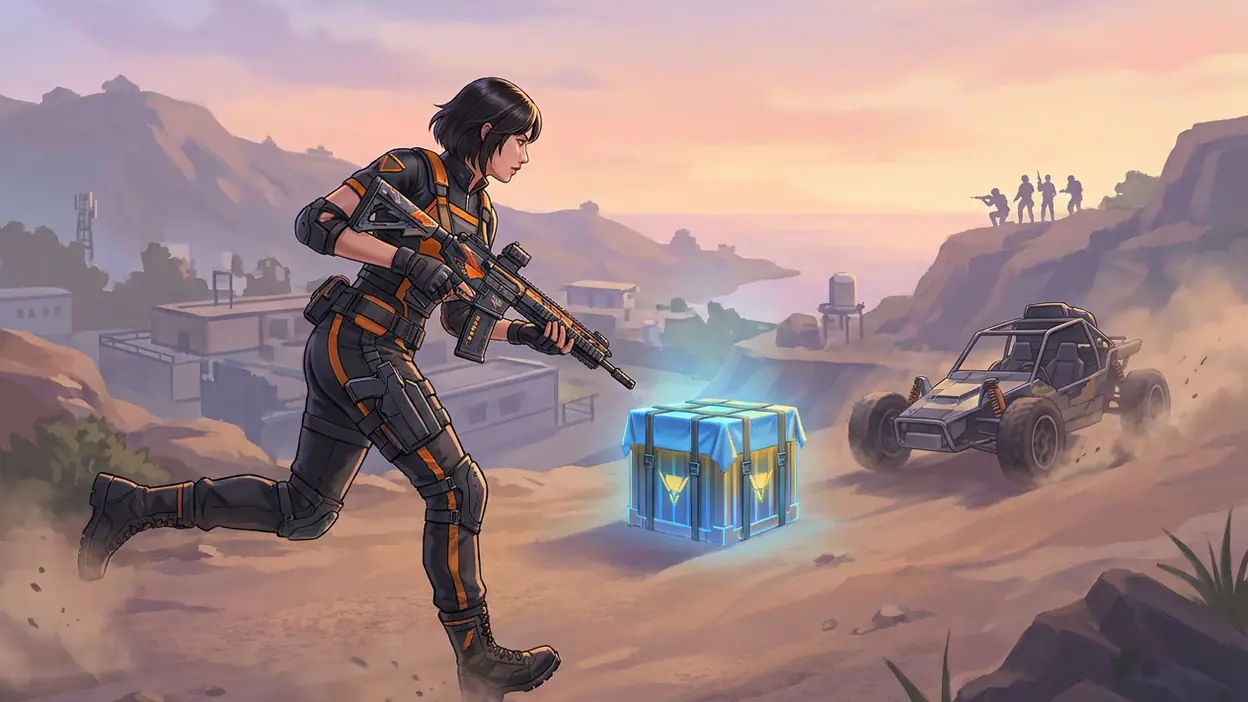
Blood Strike’s system lets players prepare weapon loadouts outside a match and make those choices matter once they are on the battlefield. You still need to collect supplies and secure the relevant opportunity in-game rather than spawning with a complete endgame kit. The loadout is therefore a destination, not a free opening advantage.

See More Apps by Blood Strike: 2.5 Anniversary


That distinction matters. A player can build around a close-range weapon, a steadier option for distance, or a combination suited to a particular approach, but the plan has to survive contact with the match. You may land in a contested area, be forced to rotate early, or lack the resources to complete the setup when you first want it. The feature gives you agency over your eventual equipment without guaranteeing that the match will cooperate.
Because weapon handling and engagement distance shape every firefight, preparation has a visible effect on play. A familiar setup reduces the time spent second-guessing an unfamiliar pickup. Attachments and weapon choices can support a consistent rhythm: push into a building, hold an angle, or keep enough flexibility to answer either situation. The exact value depends on what the player has unlocked and prefers, but the underlying promise is clear: make your preferred combat style attainable, not automatic.
Why that matters more than convenience
Battle royale loot can create memorable improvisation, but it can also make a loss feel decided by an awkward pickup rather than a bad decision. Custom loadouts soften that frustration. They give returning players a route toward the weapons they understand, which makes a defeat easier to interpret: perhaps the rotation was late, the approach was exposed, or the fight was simply lost. You are less likely to spend the entire match feeling that the game handed you the wrong tools.
That does not make the system perfectly fair by itself. A well-prepared player still has to secure access to a desired build, and progression can influence which options are available. Yet it shifts some of the contest away from pure luck and toward planning, movement, and timing. For a fast mobile shooter, that is a useful change in emphasis. Skill becomes easier to express when the weapon in your hands is not a complete surprise.
It also gives the match a second kind of objective. A supply opportunity is not valuable only because it contains general survival resources; it can move you closer to the loadout you planned. That makes route choices more legible. Do you detour for the equipment you know how to use, or stay on a safer path with whatever you have found? The answer changes with your squad, the circle, and the level of nearby pressure.
The best moment for the system
The feature makes the most sense in a squad match after a rough opening. Imagine landing with a workable but unremarkable weapon, losing the first position you wanted, and regrouping with teammates while the safe zone begins to pull you across the map. A planned loadout gives the squad a concrete next step: gather what is needed, protect the player who is making the run, and then move before the route closes.
That sequence creates a satisfying middle-game beat. The team is not merely wandering from one loot pile to another; it is coordinating around a specific payoff. One player can watch a flank while another collects supplies. The loadout becomes a small tactical project, and finishing it feels earned because it required time and exposure. In a game built around quick encounters, a short planning phase can make the next fight feel more personal.
Solo players get a quieter version of the same benefit. A preferred weapon can make a cautious rotation feel purposeful rather than passive. You have a reason to stay on a route, but the need to survive keeps that plan from becoming a checklist. The feature is strongest when it gives you a goal without telling you exactly how to reach it.
How it changes the rhythm of a match
Without a dependable path to chosen equipment, the early game tends to reward immediate adaptation: take what is available and make it work. Blood Strike still asks for that adaptability, but its loadout system adds a longer arc. You can begin with a rough kit, work toward a preferred setup, and then carry that confidence into later fights. The match has an opening scramble, a middle stretch of resource management, and a more deliberate endgame built around the tools you secured.
This changes behavior in subtle ways. Players may be more willing to leave a decent weapon behind if they are close to completing a better plan. They may also avoid a fight that would jeopardize the route, or choose one because winning it could protect their investment. That is useful tension: the loadout is valuable enough to care about, but not so precious that every encounter becomes an interruption.
There is a replayability gain here, too. A weapon build is not just a collection of numbers; it is a prompt to play differently. Trying another combination can alter how confidently you cross open ground, how close you want to take a fight, and whether you prefer to support a teammate or initiate. Even when the map and match structure repeat, a new setup can give the next drop a different purpose.
Smart design, with a visible limit
The clever part is that the feature connects a menu decision to a battlefield decision without erasing the game’s loot loop. It gives players enough control to develop a recognizable style, while keeping access conditional on what happens during the match. That is a better fit for a battle royale than simply handing everyone a favorite weapon at the start. It preserves uncertainty where uncertainty creates drama, but trims it where it can feel arbitrary.
There is a practical benefit on a phone, too. Mobile sessions often happen in short bursts, and a player may not want to spend half a match sorting through weapons they have no interest in learning. A prepared build reduces that mental overhead. You can focus on reading the fight, tracking teammates, and choosing when to push rather than repeatedly debating whether an unfamiliar pickup is marginally better.
The limitation is that a planned kit can make the loot game feel less exploratory. Once you know what you want, random weapons may become temporary clutter rather than exciting discoveries. The system can also feel uneven if the resources or opportunities needed for a loadout are contested, inconveniently placed, or difficult for newer players to access. Preparation improves control, but it cannot guarantee equal access or remove the learning curve around weapon choices.
There is a risk of overcommitting, as well. A build that looks perfect in a quiet menu may not suit the match you actually get. A close-range setup can be awkward when the circle leaves you crossing open ground; a long-range preference may be less helpful inside cramped structures. The feature is at its best when players treat their loadout as a strong starting preference, not a promise that every encounter will happen on their terms.
How other games solve the same problem
Many battle royales lean harder on discovery, asking players to adapt to whatever drops nearby. That can produce wonderfully messy stories, but it gives the player less control over a consistent combat identity. At the other end, shooters that provide fixed classes or complete starting kits make each match more predictable, though they can reduce the pleasure of building toward equipment during play.
Blood Strike takes a middle route. Its loadout system supports deliberate preparation, while the match still puts distance, danger, and resource collection between a plan and its payoff. That makes the comparison useful: this is not simply a promise to make every player equally equipped, nor a return to pure random scavenging. It is an attempt to make the search for weapons serve a chosen play style.
Other mobile games, such as UNO! or Android Auto, address entirely different needs, so they are not meaningful mechanical comparisons. The relevant distinction is between games that ask players to improvise entirely from drops and those that allow a planned build to influence a match. Blood Strike’s answer is compelling because it keeps the build tied to risk rather than turning it into a guaranteed reward.
Who gets the most from it
The system is particularly valuable for players who return regularly and have learned which weapons suit them. A familiar loadout can make practice feel cumulative: each match is another chance to improve with a preferred setup, rather than another fresh negotiation with random loot. Squad players benefit when they can coordinate roles around complementary choices, while solo players gain a clearer personal objective during the mid-game.
New players may appreciate having a direction, but should not mistake a preset build for a shortcut to mastery. Weapon familiarity helps; it does not replace positioning, timing, or awareness. The loadout feature is less rewarding for someone who enjoys the chaos of adapting to every pickup, and it can frustrate players who expect their selected kit to be available immediately.
For everyone else, the right way to think about it is as a tool for shaping a match, not controlling it. Prepare a setup, pursue it when the situation allows, and be ready to abandon it when survival demands something else. That flexible mindset gets more value from the system than treating the menu choice as an order the battlefield must obey.
A strong feature because it leaves room for risk
Blood Strike: 2.5 Anniversary makes its loadout feature work by refusing to make it effortless. A preferred build can reduce the randomness that makes weapon-based shooters feel unfair, but the player still has to survive long enough to claim it. That tension connects preparation to movement, teamwork, and the changing state of the match, giving the feature genuine tactical weight.
It is not flawless. Planned weapons can narrow the pleasure of scavenging, and the route to a chosen setup may not feel equally smooth in every match. But the system gives players a reason to think ahead without flattening the battle royale into a predictable shooting gallery. For anyone who wants a more consistent combat style while keeping the pressure of the drop, it is one of Blood Strike’s most useful design choices: a plan that matters precisely because the game can still disrupt it.
You May Also Like

 Pandora - Music & Podcasts
Pandora’s Music Is Easy to Start, but Harder to Recover
Pandora’s strength is its low-effort path from a seed to a station. Its weak spot is how much confidence it asks you to place in connection, setup, and quiet recovery.

 8 Ball Pool
 Is Built on Rivalries, Rematches, and Routine
A close look at the rivalries, rematches, shared routines, and unanswered safety questions that turn a quick pool match into a persistent mobile community.

 Samsung Music
’s Quiet Strength Is Playing What You Already Own
Its reach comes less from spectacle than from dependable access to a personal library. That simplicity is both the app’s strongest retention engine and its ceiling.

 AccuWeather: Weather Radar
AccuWeather Review: A Quick, Clear Forecast for Everyday Decisions
For everyday plans, the best forecast is the one you can understand quickly. AccuWeather makes rain timing, radar, and local conditions easy to act on, with a few trade-offs.

 Hill Climb Racing
Why Hill Climb Racing Still Turns Crashes Into One More Run
A tiny car, a bumpy hill and one more upgrade: Hill Climb Racing keeps resurfacing because its simple chaos makes every near-miss feel personal.

 AliExpress - Shopping App
AliExpress Makes Global Shopping Feel Personal, but Shoppers Bear the Risk
AliExpress turns a global marketplace into a pocket-sized discovery engine. Its reach is useful, its shopping loop compelling, and its trade-offs easy to miss.