 Samsung Music
’s Quiet Strength Is Playing What You Already Own
Its reach comes less from spectacle than from dependable access to a personal library. That simplicity is both the app’s strongest retention engine and its ceiling.
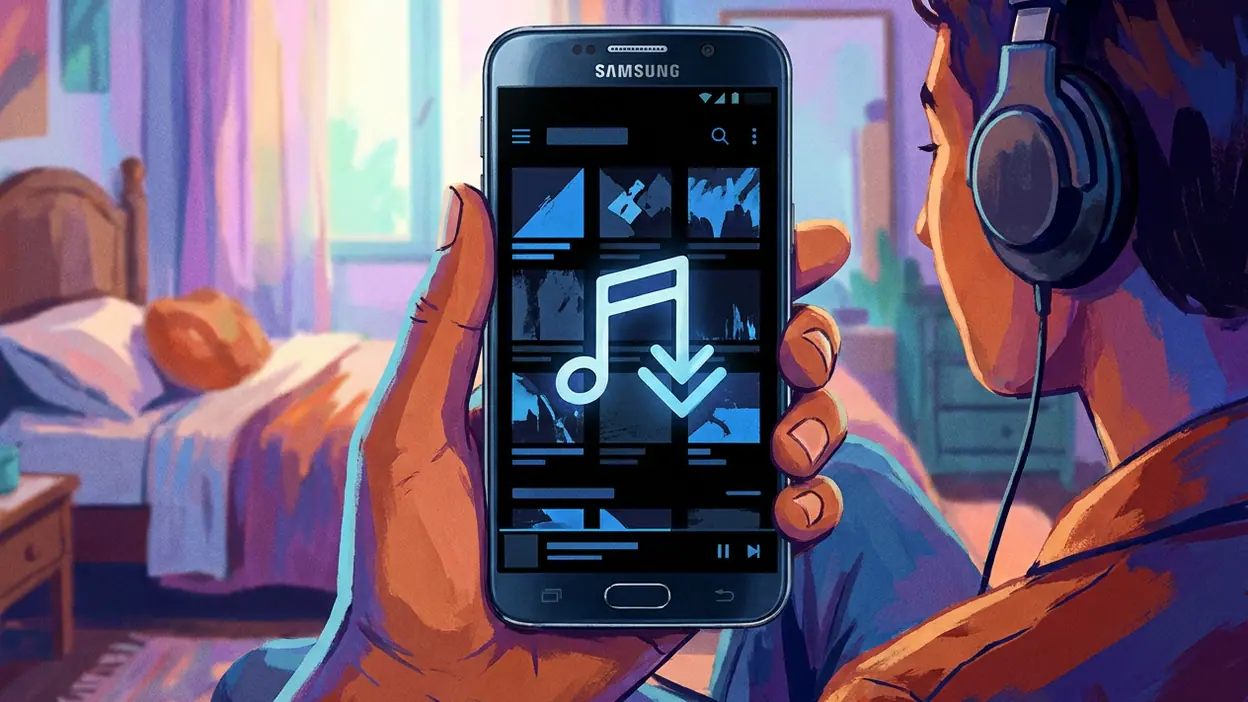
The easiest way to understand Samsung Music is to notice what it refuses to become. It is not trying to turn a music library into an endless social feed, a recommendation engine, or a subscription pitch. Its appeal is more grounded: open the app, find a track already on your device, and press play. That modest promise has helped it earn a durable place on Samsung phones. The habit is practical rather than glamorous, and the same restraint that keeps it useful also limits how far it can grow.
How a simple player keeps its place
Why it got this big
Samsung Music benefits from an advantage that many apps cannot manufacture: it belongs to the Samsung phone ecosystem. For owners who want a straightforward way to play audio files stored locally, it is an obvious destination. There is no need to build a new routine around a separate service or first assemble a streaming library. The app meets users where their music already is.
That placement matters, but it is not the whole explanation. Plenty of preinstalled software gets ignored. A music player earns repeat use only if it makes a familiar task feel easy. This one keeps the basic route short: browse a collection, choose a song, and manage playback from a compact interface. It is a tool with a clear job, which makes it easy to return to without reconsidering the choice every time.

See More Apps by Samsung Music


Its audience is also broader than dedicated collectors. Some people keep downloaded albums for travel, unreliable connections, or a few personal favorites they do not want buried in a streaming catalog. Others simply have audio files and want to hear them. Samsung Music handles those ordinary cases without requiring a subscription, an account, or an elaborate setup. That low-friction entry point is a quiet form of reach.
What it does better than rivals
The central distinction is ownership. Spotify and YouTube Music are built around vast catalogs, discovery, and recommendations; Samsung Music is built around the files available on the phone. That difference shapes the whole experience. A locally stored track is not dependent on a subscription tier, a licensing change, or a network connection. If the file is there, the app can play it.
That reliability is particularly valuable in places where mobile data is scarce, costly, or simply unreliable. It also suits listeners who have built a collection over years and want direct control over it. Instead of asking a service to remember what they like, they can browse their own tracks and albums. The interface’s familiar library categories make that collection feel like something to navigate rather than a folder to tolerate.
It is not a fair contest to measure this player against streaming services by the size of their catalogs. It does not provide the same discovery machinery, and it cannot conjure music the user has not already obtained. But it removes a different kind of friction: the distance between a file and the moment someone wants to hear it. In that narrow lane, focus is a real advantage.
Where the design feels sticky
Samsung Music’s stickiness comes from the way it settles into small, repeated moments. A user might start an album while getting ready, resume a playlist during a commute, or put on a familiar track while working. The app does not need to make each visit feel novel. It needs to make the same useful action dependable. Familiarity becomes its interface feature.
Browsing by songs, albums, artists, and playlists supports that loop. Those categories match how many people think about their music, so the app asks for little interpretation. Playback controls remain the point of attention, not an obstacle between the listener and the sound. Once a library is established, repeat openings can feel almost automatic: locate, play, carry on.
There is also a welcome lack of pressure. The app does not need to interrupt every session with a new recommendation or a prompt to explore. For listeners who know what they want, this calm is part of the utility. It gives the player a dependable, almost appliance-like character: not exciting every time, but ready when called on.
How it earns repeat opens
The habit loop begins before the app opens. A user has music saved for a reason: a favorite record, a playlist for a particular mood, or tracks kept available for offline listening. When that need returns, the app is already a familiar route to the material. The reward is immediate and specific: the chosen song starts, without a search across a streaming catalog or an algorithm guessing at the mood.
That kind of repeat use is easy to underestimate because it does not look like engagement engineered for screenshots. There may be no daily streak or social challenge to keep a person checking in. Instead, the app earns its place through recurring utility. It is used whenever the personal collection is the right answer, and that can happen several times a day without making the app feel demanding.
Shazam, by contrast, is useful at the moment a listener wants to identify a song; StarMaker makes singing with others the activity. Those apps compete for particular musical moments, not for the same job. Samsung Music’s role is less dramatic but more routine: it serves the part of listening that begins with music already in hand.
What users forgive
People are willing to forgive a plain design when the app does not get between them and their music. A player need not reinvent album browsing or turn playback into a performance. If the controls are easy to understand and the library is available, a lack of theatrical polish can feel like an honest trade.
Users may also accept that the app is not a discovery service. That absence is only a flaw when someone expects a streaming platform from it. For an offline listener, a small, reliable tool can be preferable to an elaborate one with features they never touch. The key is that Samsung Music’s limitations are visible: it is a local player, not a universal source for every song.
Its restraint does not excuse every rough edge, but it does explain why a basic experience can remain welcome. The app does not ask users to change their taste or their listening habits. It asks them to bring their own music and gives them a way to play it.
Where the cracks show
The same dependence on a personal collection creates the biggest ceiling. If a listener wants to discover new artists, search a huge catalog, or move between devices with a synchronized streaming library, Samsung Music is not enough. It cannot match Spotify’s recommendation systems or YouTube Music’s connection to an immense video catalog. The user must supply the music, and that requirement grows less convenient as listening shifts toward subscription services.
Local libraries can also demand upkeep. Files need to be present and organized; a song bought or downloaded elsewhere may not appear in the same place as a streamed favorite. The experience can feel less unified than a service that puts nearly everything behind one search box. For listeners who switch phones or use multiple platforms, a device-centered player may not travel with them as naturally as an account-based library.
There is a more subtle weakness in the app’s very competence: it gives people little reason to spend time inside it beyond playback. That is sensible for a tool, but it means the product has less room to build a richer relationship with listeners. When convenience depends on the files being stored locally, changing how a person gets music can make the app less central overnight.
Who benefits most
The best fit is a Samsung owner with a collection of downloaded or transferred music who values direct control and offline access. It also suits people who prefer familiar albums to endless recommendations, or who want a no-fuss player for the tracks they already know. For that group, the app’s practical nature is not a compromise; it is the point.
Listeners who mainly stream new releases, build collaborative playlists, or expect their library to follow them across devices will be better served by a subscription platform. Many people will use both kinds of app for different reasons. A streaming service can handle discovery and breadth, while a local player remains useful for saved files, personal recordings, and music they want available without a connection.
What keeps competitors behind
Streaming rivals cannot erase the appeal of ownership simply by adding more songs. A local file remains accessible on the device without a catalog search, and the listener decides what belongs in the collection. That makes Samsung Music’s advantage specific rather than universal: it is strongest when a user values certainty and control more than scale.
At the same time, Samsung Music cannot rely on that distinction forever. The habit is tied to how people acquire and store music, and many now expect a library to live in an account rather than on one handset. The app’s ecosystem position helps it stay within reach, but convenience can cut both ways. If listening has moved elsewhere, being easy to find is not enough to make it indispensable.
Whether the dominance lasts
Its lasting strength is likely to be as a dependable companion, not as the center of everyone’s music life. As long as Samsung users keep audio files on their phones, a clear local player will have a job to do. The appeal will be strongest among people who know what they want to hear and want fewer steps between that decision and playback.
What could weaken that position is not a single flashy competitor feature, but a gradual change in habit. If personal libraries give way entirely to streaming accounts, the app’s core advantage becomes less relevant. Samsung can preserve its usefulness by keeping local playback simple and reliable, but it cannot force listeners to maintain a collection they no longer want.
My verdict is that Samsung Music wins through dependable access, not musical discovery. It earns repeat opens by making a familiar task quick, private, and independent of a connection. That is enough to make it genuinely useful, and its plainness is often a virtue. But it is not a replacement for a streaming service, nor does it try to be one. For listeners with music already on their Samsung phone, it remains a quietly effective player; for everyone else, its value depends on whether owning the files still matters.
You May Also Like

 Pandora - Music & Podcasts
Pandora’s Music Is Easy to Start, but Harder to Recover
Pandora’s strength is its low-effort path from a seed to a station. Its weak spot is how much confidence it asks you to place in connection, setup, and quiet recovery.

 8 Ball Pool
 Is Built on Rivalries, Rematches, and Routine
A close look at the rivalries, rematches, shared routines, and unanswered safety questions that turn a quick pool match into a persistent mobile community.

 AccuWeather: Weather Radar
AccuWeather Review: A Quick, Clear Forecast for Everyday Decisions
For everyday plans, the best forecast is the one you can understand quickly. AccuWeather makes rain timing, radar, and local conditions easy to act on, with a few trade-offs.

 Hill Climb Racing
Why Hill Climb Racing Still Turns Crashes Into One More Run
A tiny car, a bumpy hill and one more upgrade: Hill Climb Racing keeps resurfacing because its simple chaos makes every near-miss feel personal.

 AliExpress - Shopping App
AliExpress Makes Global Shopping Feel Personal, but Shoppers Bear the Risk
AliExpress turns a global marketplace into a pocket-sized discovery engine. Its reach is useful, its shopping loop compelling, and its trade-offs easy to miss.

 Lords Mobile: Kingdom Wars
Lords Mobile Is a Kingdom-Building Routine, Not a Quick Match
A case-by-case verdict on the building, battles, device demands, and social commitments that make Lords Mobile rewarding for some players and exhausting for others.