How OTR - Offroad Car Driving Game Builds Community Through Shared Driving Stories
July 23, 2026
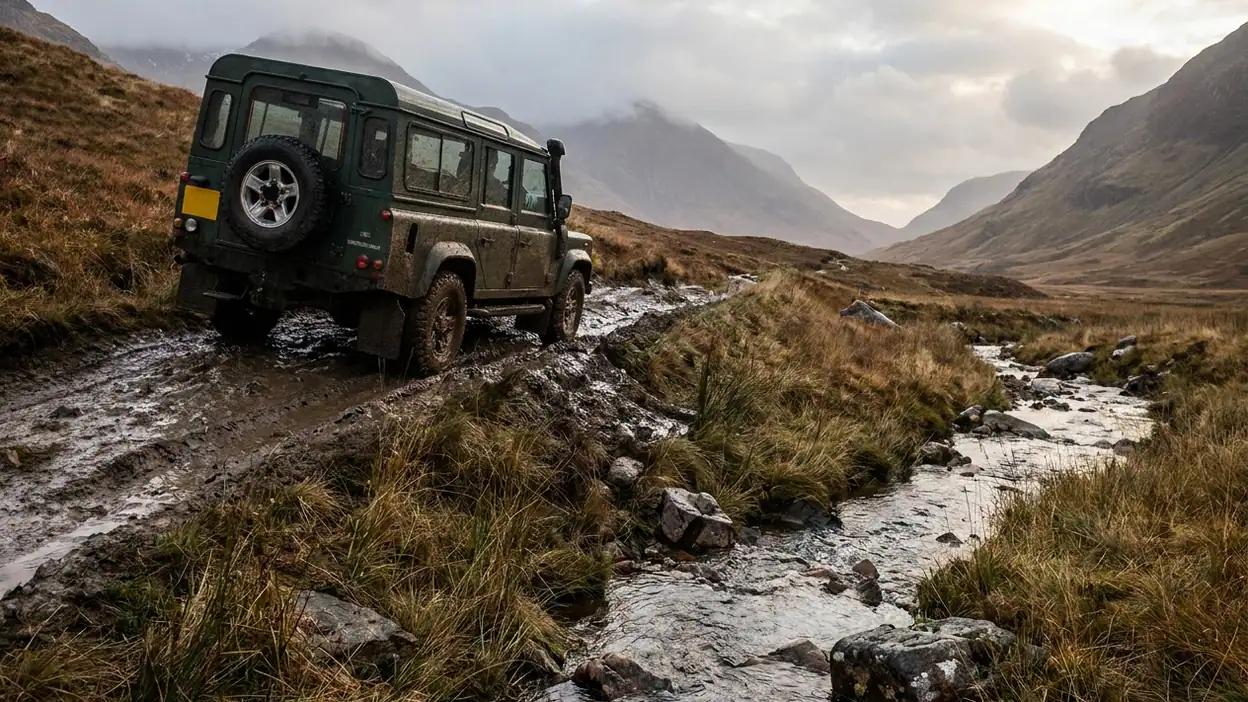
The most interesting thing about OTR - Offroad Car Driving Game is not the promise of another off-road vehicle or another muddy hill. It is the way the game turns a broad, physical playground into a place players can inhabit together, even when the social layer is less polished than the driving itself. OTR feels built around stories: a difficult climb finally conquered, a ridiculous recovery after rolling into a river, a race improvised across terrain that was never designed as a conventional track. Its community grows from those moments, not from a dense social network wrapped around them.
That distinction matters. OTR is primarily a driving game, with open areas to explore, vehicles to unlock or operate, challenges to chase, and a physics system that makes simple movement feel surprisingly expressive. Yet its replay value comes partly from what players do with the spaces between objectives. The game gives people room to experiment, compete, cooperate, and share the results. The community ecosystem is therefore real but informal: more campfire conversation than organized club, more memorable clip than carefully moderated platform.
The community hook is the landscape itself
Most mobile racing games teach players to look forward: find the racing line, brake at the marker, overtake the next car. OTR asks them to look around. A slope, stream, bridge, forest track, or rocky ridge can become the center of a session because the terrain creates a small problem worth solving. That problem is easy to explain to another player and satisfying to demonstrate. “Can this vehicle make it up there?” is a stronger social prompt than a menu full of generic challenges.

This gives OTR a useful community hook. Players do not need a formal event calendar to invent a contest. They can compare climbing routes, test which vehicle survives a particular descent, or turn a scenic area into a meeting point. The open-world design makes the game feel less like a sequence of races and more like a shared toy box. Even solo play can produce material that naturally invites discussion, especially when the physics create an unexpected result.
The hook is also accessible. A newcomer can understand a dramatic jump or a failed hill climb without knowing every upgrade, map route, or competitive ranking. That matters for mobile communities, where a player may discover the game through a short video, a friend’s recommendation, or a passing comment rather than through a dedicated racing forum.
The participation model is loose, practical, and player-led
OTR does not need every player to become a content creator. Its participation model works in layers. At the lightest level, players simply explore and collect their own stories. A more involved player repeats difficult routes, learns vehicle behavior, and develops personal techniques. The most active participants may record runs, share screenshots, compare progress, or organize informal challenges with friends. Each layer adds value without requiring the player to join a formal guild or maintain a public profile.
That low-pressure structure suits the game. The core loop is tactile: choose a vehicle, pick a destination, manage acceleration and steering, recover from mistakes, and try again. Community participation extends that loop rather than replacing it. A player might spend ten minutes attempting a steep ascent, then another ten minutes trying to reproduce the success with a different vehicle. The audience may be one friend, a small group chat, or nobody at all. The act remains worthwhile because the game makes experimentation entertaining.
There is a trade-off. Informal participation is easy to enter, but it can be difficult to sustain. Without strong in-game tools for clubs, events, messaging, or shared goals, the community depends on external channels and individual enthusiasm. That keeps the game relaxed, yet it also means many potentially valuable interactions disappear after a session.
Newcomers enter through spectacle, not instruction
The first invitation into OTR is usually visual and physical. A vehicle crossing rough ground, sliding down a muddy incline, or reaching a remote point communicates the game’s appeal faster than a tutorial paragraph. New players can see that the world is not merely a backdrop for races. It is the challenge.
Once installed, newcomers enter the community indirectly. They learn by watching how other players approach terrain, which vehicles they favor, and how much patience they apply to a difficult route. A player who arrives expecting a conventional arcade racer may initially find the pace loose, but that looseness becomes clearer when seen through another player’s experiment. The community teaches the game’s unwritten rules: momentum matters, recovery is part of the fun, and a failed attempt can be as shareable as a clean victory.
The barrier is that OTR’s onboarding does not automatically explain the social possibilities. A newcomer may understand how to drive without understanding how to participate in the wider culture around the game. There is a difference between learning the controls and learning what other players consider interesting. That second lesson is mostly discovered through clips, comments, friends, or repeated play.
Recurring rituals replace formal events
Every durable game community develops rituals, and OTR’s are likely to be small, repeatable acts rather than official ceremonies. Players return to a favorite hill to improve a time. They revisit a difficult crossing with a newly unlocked vehicle. They attempt a route that previously ended in a rollover. They compare whether a careful approach or a full-speed charge produces the better result. These rituals give the open world a memory.
The recovery moment is especially important. In a conventional race, leaving the track is usually a mistake to erase. In OTR, getting stuck, tipping over, or sliding into an awkward position can become part of the session’s identity. Players learn the terrain through failure, then repeat the route with a better plan. That rhythm creates a community language built around places and incidents rather than only scores.
Another ritual is the informal tour. One player discovers a scenic or technically difficult location and brings others there, either in multiplayer or through a shared recording. The destination becomes meaningful because it has been recommended. This is where OTR’s world becomes social: not because every corner is crowded, but because players attach stories to particular corners and pass those stories along.
Player contribution is measured in routes, techniques, and proof
OTR’s creators provide the world, vehicles, handling, and objectives, but players supply much of the practical knowledge that makes the world legible. A useful community contribution might be a route guide, a vehicle comparison, a short demonstration of a difficult maneuver, or a warning about a deceptive slope. None of these contributions needs to look like professional content. Their value comes from solving a problem another player is likely to encounter.
Video is a natural format for this game because driving is difficult to describe in words. A clip can show the angle of approach, the speed needed, the moment to correct a slide, or the consequences of choosing the wrong line. Screenshots work differently: they preserve a discovery, a vehicle, or a dramatic location. Together, these formats turn personal play into a library of examples.
The strongest contributions are not necessarily the most spectacular. A spectacular jump attracts attention, but a careful explanation of how to reach a remote area may help more people. OTR benefits when players document the ordinary expertise of the game: how to read terrain, when to stop spinning the wheels, and how to recover without abandoning the attempt. That knowledge gives the community practical depth.
There is also room for creative contribution. Players can invent themed drives, vehicle restrictions, hill-climb challenges, scenic tours, or endurance routes. These ideas extend the game without requiring new official content. However, they remain fragile unless other players can easily discover, repeat, and discuss them. A challenge that exists only in one private message has limited network value.
Competition is more interesting when it is self-imposed
OTR can support competition, but its best competitive moments may not resemble a traditional leaderboard. The terrain encourages personal benchmarks: reach the ridge without rolling, complete the route using a slower vehicle, recover from a bad landing, or finish with fewer failed attempts. These goals feel more distinctive than simply shaving fractions of a second from a fixed circuit.
This kind of competition is welcoming because it allows different skill sets to matter. One player may be fast and aggressive; another may be methodical and precise. A third may know the map well enough to find a safer route. Sharing the result becomes a way to compare approaches rather than merely rank people from first to last.
Still, self-imposed competition has a ceiling. Without trusted timing systems, standardized conditions, or clear verification, claims are difficult to compare. Community challenges can become persuasive rather than authoritative: players believe a run because it looks convincing, not because the game has formally certified it. That is fine for casual play, but it limits the growth of a serious competitive scene.
Cooperation appears through rescue, guidance, and shared discovery
Off-road driving naturally creates cooperative situations. A player stuck in an awkward position can become the center of a rescue attempt. Friends can guide one another toward a route, demonstrate a technique, or simply travel together without turning the session into a strict race. These interactions fit the game’s physical logic. Cooperation is not an abstract bonus; it is a response to the terrain.
That makes OTR’s social potential feel more organic than a forced team mode would. Players cooperate because the world gives them a reason. A difficult climb becomes a group problem. A remote location becomes a destination worth reaching together. Even when the game does not provide deep collaboration tools, the environment creates openings for it.
The limitation is consistency. Cooperative play depends on who is available, how multiplayer sessions are structured, and whether players can communicate comfortably. If those systems are basic, cooperation may be memorable but intermittent. The game can create the conditions for teamwork without guaranteeing that teamwork will become a lasting habit.
Social friction begins with physics, patience, and uneven expectations
The same physics that make OTR entertaining can also produce friction. A player who enjoys slow experimentation may frustrate someone who wants constant racing. One person may treat a vehicle rollover as a funny shared moment; another may see it as wasted time. Open-world freedom is generous, but it does not tell a group what to do next.
There is also a skill gap that can become visible quickly. Experienced players know how to manage momentum and terrain, while newcomers may spend a long time spinning their wheels or choosing impossible lines. If the community responds with encouragement, that gap becomes a learning curve. If it responds with mockery or impatience, the newcomer may leave before discovering the game’s deeper rhythm.
Competitive friction is less about aggression than about unclear standards. If players share times or challenge results without common rules, disagreements can arise over vehicle choice, route selection, resets, or outside assistance. OTR’s informal culture is flexible, but flexibility requires good faith. The more seriously a group takes its records, the more it needs shared definitions.
Another source of friction is repetition. The open world can feel rich during discovery, but familiar routes lose some of their mystery. A community that relies only on the same hill climbs and stunt clips may become predictable. Long-term health requires fresh routes, new constraints, updates, or player-made formats that make old spaces feel different.
Moderation and safety remain the least visible part of the ecosystem
Any discussion of a game community needs to separate what can be observed from what cannot. OTR’s driving and exploration systems are easy to evaluate directly. The quality of moderation, reporting, privacy controls, age safeguards, and enforcement practices is harder to judge from ordinary play unless the game clearly documents those systems or a player encounters them.
That uncertainty matters most when interaction moves beyond the game itself. Public comments, shared videos, group chats, and external communities may expose younger players to spam, harassment, manipulative links, or pressure to disclose personal information. The existence of a friendly player culture in some spaces does not prove that every connected space is safe. Nor does the absence of visible problems prove that moderation is comprehensive.
Players should treat external sharing with ordinary caution: avoid publishing private details, be skeptical of unsolicited downloads or account requests, and use platform reporting tools when necessary. Developers can help by making reporting clear, limiting unwanted contact, explaining data practices, and giving players control over visibility. Without transparent information, it is difficult to award OTR a strong safety claim beyond the basic observation that its core appeal is driving rather than social messaging.
This is not a criticism unique to OTR. Google Wallet, for example, is judged heavily by trust and account protection, while a game such as Tiles Hop Music & Ball Game can gain attention through shareable performance clips. OTR sits between those models: it is not a social utility, but its most compelling moments are easy to broadcast. That makes the boundaries around sharing worth taking seriously.
Network value appears when a private experiment becomes a public invitation
A community becomes valuable when each participant can make another participant’s experience better, richer, or easier. In OTR, that value appears in discoveries. A route recommendation saves time. A vehicle tip prevents frustration. A video shows a technique that would otherwise take twenty failed attempts to understand. A challenge gives a familiar map area a new purpose.
The network effect is modest but tangible. One player’s experiment becomes another player’s starting point. The second player may improve the method, find a shortcut, or create a harder variation. Over time, the game’s effective content expands beyond what the developer placed in the map. The world remains the same, but the community’s understanding of it grows.
This is different from the utility network around Weather - By Xiaomi, where value is tied to timely information and repeated daily need. OTR’s network value is episodic and emotional. It appears when players are curious, stuck, competitive, or eager to show something unusual. That makes it less dependable, but also more personal. A good tip in a driving community can feel like a shared secret rather than a routine service.
Words of Wonders: Crossword builds a different kind of network value through answers, progress, and comparison. OTR’s equivalent is not a solution list. It is a route, a technique, or a story. The community does not simply tell players what to do; at its best, it gives them a reason to try.
Can the ecosystem last?
OTR’s community can last if the game continues to reward curiosity after the first wave of discovery. The foundation is strong: physical terrain produces repeatable challenges, vehicles create variation, and failure generates stories. Those qualities are more durable than a single campaign because they let players set their own goals.
Longevity will depend on whether the developer and the community keep adding structure without smothering freedom. New vehicles, areas, challenges, and quality-of-life improvements can refresh the playground. Better sharing tools could make player discoveries easier to find. Lightweight events or rotating community challenges might give people a reason to return without turning the game into a rigid service.
Player creativity can carry the game for a while, but it cannot carry everything. If the same content is repeatedly recycled and the social tools remain difficult to use, the community may narrow to a small group of dedicated enthusiasts. That group can be passionate, yet passion alone does not guarantee discoverability. Newcomers need clear paths into the culture, and veterans need reasons to keep teaching, competing, and experimenting.
The best sign for OTR is that its core activity does not become meaningless when the formal objectives run out. Driving across rough terrain remains satisfying because the player is making decisions every second. The question is whether the community can keep turning that private satisfaction into shared occasions. If it can, the game has an unusually durable foundation for a mobile off-road title.
The community verdict
OTR’s ecosystem is not a bustling social platform attached to a racing game. It is quieter and more improvised than that. Its community grows from the physical character of the world: steep climbs, awkward recoveries, scenic detours, vehicle experiments, and the small pride of reaching a place that previously seemed unreachable.
That makes the game particularly good at generating stories that players can exchange. The strongest participation is low-pressure, practical, and creative. Players contribute routes, techniques, challenges, proof, and encouragement. They compete through personal benchmarks, cooperate when the terrain gives them a reason, and build shared knowledge one discovery at a time.
The weaknesses are equally clear. Social organization is not the main attraction, so formal community features may feel secondary. Moderation and safety practices are difficult to assess without more direct transparency. Informal competition lacks the authority of standardized leaderboards, and the ecosystem could lose momentum if updates or player-made challenges stop refreshing familiar terrain.
My verdict is that OTR’s community value is genuine, but it lives in the margins of the driving rather than in a separate social layer. The game succeeds when it lets players turn a hill into a contest, a mistake into a story, and a route into an invitation. It will not replace a dedicated multiplayer racing community, and it does not need to. Its more convincing achievement is smaller: it makes off-road driving feel like an activity worth showing someone else, then gives that person a reason to try the same impossible climb.