How Pizza Ready! Turns Restaurant Pressure Into Mobile Simulation
June 25, 2026
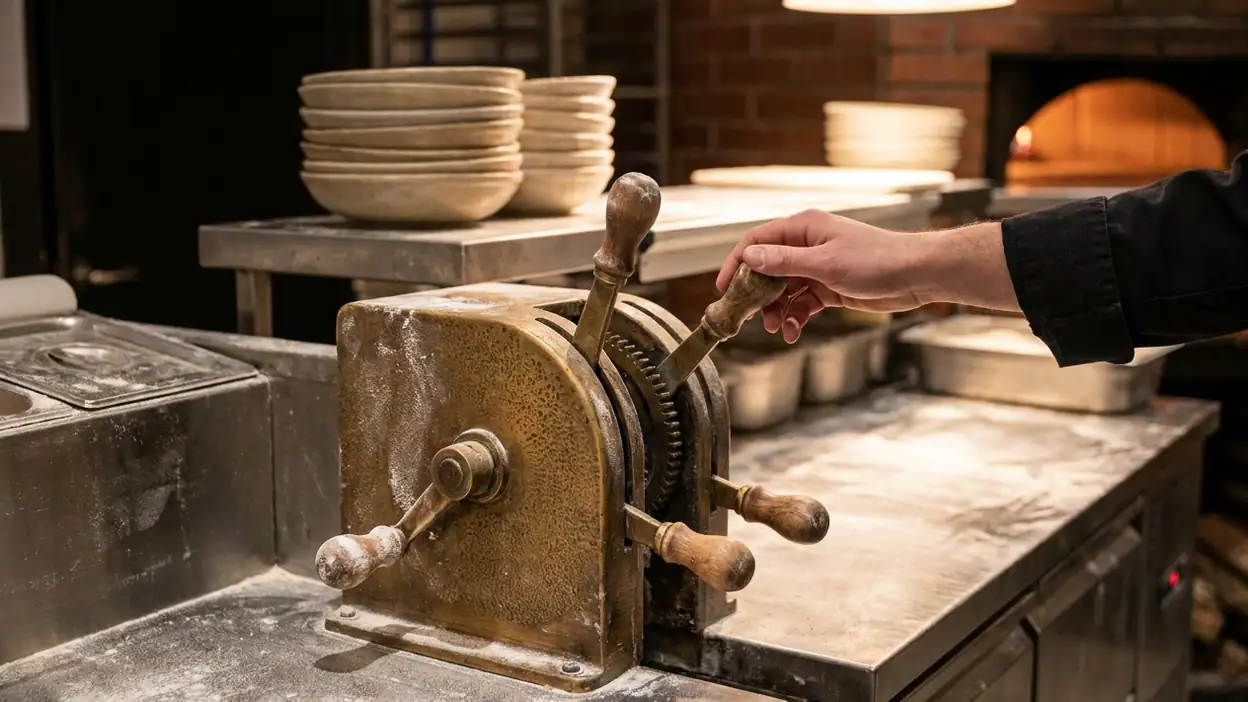
Pizza Ready! looks like a game about making pizzas, but its real subject is pressure. Orders arrive, ovens need attention, customers wait, staff move between stations, and every upgrade promises to turn a crowded counter into a better-oiled business. That makes it a useful snapshot of mobile simulation in 2025: the genre is no longer satisfied with giving players a spreadsheet and calling it depth. It wants motion, instant feedback, short sessions, and a business fantasy that can be understood before the first minute is over.
My central impression after spending time with it is that Pizza Ready! succeeds because it makes management feel physical. You do not simply increase a statistic called service speed. You watch the restaurant become more capable. More tables fill the room, more workers carry the load, and the path from raw ingredients to a satisfied customer becomes easier to read. The game is not a demanding restaurant simulator, and it does not pretend to be one. Its value lies elsewhere: it shows how casual simulation is moving toward compact, visible systems that reward attention without demanding a second job.
The category is selling momentum, not just management
The old mobile simulation pitch was straightforward. Build a business, collect currency, buy upgrades, repeat. That loop still powers a huge portion of the market, from theme parks and dinosaur collections to fishing spots, vehicle workshops, and planetary destruction. Jurassic World: The Game wraps progression around creature collection and park expansion. Disney Magic Kingdoms turns familiar characters and attractions into a long-running construction schedule. Fishing Clash: Sport Simulator uses equipment, locations, and competition to make repeated catches feel like progress. Vehicle Masters builds a satisfying career out of increasingly precise driving tasks. Even Solar Smash, which is less about running a business, understands the same need for immediate action and visible consequence.

What has changed is the amount of texture players expect between upgrades. A modern simulation game has to communicate its systems quickly, make progress legible, and provide a reason to return that is more immediate than a timer counting down. Players want to see the machine working. They want to understand what their decision changed. They also want the game to respect the shape of a phone session: a few minutes in a queue, a short break, or a longer evening where several improvements can be chained together.
Pizza Ready! sits directly inside that shift. Its restaurant is small enough to understand at a glance, but busy enough to create friction. The pleasure comes from reducing that friction. An upgrade is not an abstract investment in a distant empire; it changes the pace of a room you can already see. That is the genre thesis in miniature: the best casual simulations now turn invisible numbers into visible behavior.
The baseline players now expect
There is a familiar checklist for this kind of game. The opening must be gentle. The first reward must arrive quickly. The central action must work with simple taps or short gestures. Currency must be easy to collect. Upgrades must be presented in plain language. The game should keep moving even when the player is not making a decision every second, but it should still offer enough activity to prevent the experience from feeling like a passive timer.
Pizza Ready! meets those expectations with a loop built around serving, expanding, and improving. You begin with a compact operation, handle the most obvious jobs, and gradually make the restaurant more efficient. The rhythm is intentionally repetitive: prepare the order, move it along, serve the customer, earn money, strengthen the bottleneck. That repetition is not a flaw by itself. In simulation games, repetition becomes satisfying when the player can identify the source of a problem and then watch an upgrade solve it.
The game also understands the importance of visual hierarchy. Customers, counters, ovens, tables, and workers are arranged so that the restaurant reads as a working space rather than a menu screen. The result is approachable even if you have never played an idle or tycoon game. You do not need to learn a complex economy before you can enjoy the fantasy of running a busy pizza shop.
That accessibility has a cost, however. The systems are intentionally shallow at first, and some players will notice how quickly the basic pattern becomes familiar. Pizza Ready! is not asking you to design a supply chain, balance ingredient quality against price, or respond to unpredictable customer behavior. It is asking you to keep the line moving. The question is whether that narrow promise can sustain interest after the first rush of upgrades.
Its strongest signal is the restaurant as a living machine
The most convincing part of Pizza Ready! is not the pizza theme itself. It is the way the restaurant communicates cause and effect. When service is slow, the problem has a location. Perhaps the oven is the choke point. Perhaps customers are waiting too long at the counter. Perhaps the staff cannot cover enough tasks. You can look at the room and form a practical diagnosis, even if the underlying numbers remain simple.
That sense of diagnosis gives the game more character than a standard upgrade ladder. The restaurant is a small machine, and each purchase changes its rhythm. A faster station reduces waiting. A new worker takes pressure away from a single employee. Extra seating turns a cramped room into a more productive one. The improvement is satisfying because it is visible before it is fully understood.
This is where Pizza Ready! feels more modern than many games in the same broad category. It does not bury every reward inside a distant map or a long list of menus. It puts the work in front of you. The player sees a queue shorten, a room fill, or a worker complete a task more quickly. Those small changes create a feedback loop that is almost tactile, despite the game being built from simple interactions.
The hook is therefore not “become the greatest pizza entrepreneur in the world.” It is “make this busy little restaurant run better.” That is a modest hook, but it is a strong one. The fantasy is concrete, and the payoff is immediate enough to support short sessions.
The conventions it follows are familiar for a reason
Pizza Ready! follows the established free-to-play simulation structure closely. Progress is divided into manageable upgrades, currencies arrive at a steady pace, and the player is guided toward the next improvement. The game rarely asks for a complicated plan. Instead, it gives you a clear obstacle and a purchase that appears to address it.
This clarity is part of the appeal. Jurassic World: The Game and Disney Magic Kingdoms rely on long-form collection and expansion, but both also understand that the player needs a constant sense of direction. New creatures, attractions, quests, and areas provide a chain of goals that keeps a large park or collection from becoming visually impressive but emotionally inert. Pizza Ready! achieves a similar effect on a smaller scale by making each upgrade feel like the next sensible step in a growing business.
It also follows the genre's preference for controlled complexity. New features can be introduced gradually, allowing the player to enjoy the first loop before additional decisions arrive. This is good onboarding, but it also reveals the category's standard compromise: the game wants to feel strategic without creating the kind of uncertainty that could frustrate a casual audience.
There is nothing wrong with that compromise. A mobile simulation game has to be readable. The problem appears when every decision is so clearly signposted that the player never needs to make a meaningful choice. Pizza Ready! occasionally approaches that limit. The best moments come when you notice a bottleneck yourself; the weaker ones arrive when the game simply points at the next purchase and waits for you to confirm it.
The convention it challenges is the idea that idle means inactive
Where Pizza Ready! pushes the category forward is in its treatment of activity. Idle progression remains important, but the restaurant does not feel like a vault that fills while you are away. It feels like a place that benefits from your presence. You can intervene, improve the flow, and watch the outcome immediately. The game makes management feel less like checking a dashboard and more like stepping onto a busy shop floor.
That distinction matters because idle design has become predictable. Collect income, tap a multiplier, wait for the next threshold, and return later. The structure can be relaxing, but it often removes the player from the very system the game claims to simulate. A restaurant that runs perfectly without its manager does not create much managerial drama.
Pizza Ready! does not eliminate passive progression, nor should it. It uses automation as a reward for improvement. The more capable the operation becomes, the less every task depends on the player. Yet the room remains interesting because there is still a visible relationship between capacity and demand. The player is not merely collecting money from an empty screen; they are watching a business become more resilient.
This is a subtle challenge rather than a radical redesign. The game retains the comfortable structure of casual mobile simulation, but it gives the player more to observe. That observation is important. It creates a reason to stay for another minute, not because a timer demands it, but because the restaurant is close to reaching a new level of efficiency.
What other games reveal about the same shift
The related games make Pizza Ready!'s position clearer. Jurassic World: The Game has the advantage of a powerful collection fantasy. A new dinosaur is immediately legible as an achievement, and the park provides a broad canvas for expansion. Its challenge is that collection can become the main event, leaving the management layer feeling like a route toward the next unlock.
Disney Magic Kingdoms takes a similar approach with attractions, characters, and recognizable locations. Its strength is emotional familiarity, but its long-term structure can make progress feel scheduled rather than earned through clever play. The player is often managing time and availability more than solving a changing operational problem.
Fishing Clash: Sport Simulator moves in another direction. It adds competition, equipment, locations, and the promise of mastery. The repeated action of casting and catching gives the player a more direct skill loop, while progression supplies the broader career fantasy. Its model shows that simulation games can remain accessible while adding pressure through performance rather than construction.
Vehicle Masters is useful as a contrast because it makes precision the source of satisfaction. The player does not simply upgrade a garage; they perform driving tasks where control and judgment matter. That gives each session a stronger sense of authorship. Solar Smash, meanwhile, demonstrates the power of immediate spectacle. It does not need a complex economy when every interaction produces a dramatic visual consequence.
Pizza Ready! sits between these models. It lacks the cultural weight of Disney, the collection pull of Jurassic World, the competitive focus of Fishing Clash, the precision of Vehicle Masters, and the spectacle of Solar Smash. Its answer is operational visibility. The restaurant is compelling because it shows the consequences of capacity, speed, and organization in a space small enough to read instantly.
That comparison points toward an emerging standard: a simulation game needs at least one system that feels authored by the player. Collection alone is not enough. Timers alone are not enough. A game can be simple, but it should let the player feel that their attention changed how the world behaves.
The emerging standard is readable depth
Readable depth does not mean adding dozens of menus. It means creating layers that remain understandable as they grow. Pizza Ready! is strongest when the player can connect an upgrade to a visible result, then decide what deserves attention next. The system may be simple under the surface, but it feels richer because the feedback is immediate.
This standard is especially important on mobile. A phone screen cannot comfortably present the complexity of a traditional management game, and most players do not want to spend their break studying a manual. The solution is not to remove decisions entirely. It is to stage them. Show the room first. Let the player notice the queue. Introduce the station. Make the upgrade solve a problem that has already been seen.
Pizza Ready! follows that logic well. Its visual language makes the business understandable before the economy becomes interesting. You know what the restaurant is trying to do, and you can tell when it is failing to do it efficiently. That is a better foundation for retention than a pile of disconnected rewards.
The game also benefits from a clear session rhythm. A short visit can produce a purchase or a small improvement. A longer visit can reveal a new bottleneck and encourage a more deliberate plan. The rhythm is not dramatic, but it is dependable. Mobile simulation does not always need a climax; it needs a satisfying cadence.
Still, readable depth has to become depth eventually. If every new area repeats the same problem with larger numbers, the clarity that helped the game at the start can turn into predictability. The category's next challenge is to preserve accessibility while allowing the player to develop preferences, make mistakes, and discover unexpected solutions.
Where the category still lags
The biggest weakness in this corner of mobile gaming is that many simulations confuse expansion with evolution. A larger restaurant, park, collection, or map is not automatically a deeper game. If the player is always buying the same kind of improvement, the setting changes but the thought process does not.
Pizza Ready! exposes that limitation because its core loop is so clean. Once you understand the relationship between service speed, capacity, and income, you can predict much of what follows. The satisfaction of improvement remains, but the surprise fades. The game could go further by introducing more meaningful trade-offs: a cheaper ingredient with lower customer satisfaction, a faster oven that increases mistakes, or a new layout that improves throughput while making staff movement less efficient.
Those complications would not need to turn the game into a hardcore management simulator. They would simply give the player reasons to disagree with the obvious upgrade. At present, the best path is often the path the game has already highlighted. That keeps the experience friendly, but it limits replay value.
Another lagging convention is the dependence on monetization rhythms that can interrupt the fantasy. Free-to-play simulation games often place a reward, a timer, or an optional boost between the player and the next satisfying improvement. Used carefully, those interruptions can support a fair business model. Used too aggressively, they remind the player that the restaurant is also a storefront.
Pizza Ready! is most enjoyable when the restaurant itself is the focus. Anything that pulls attention away from that physical loop weakens the illusion. The category would benefit from monetization that feels more like a choice about style, convenience, or long-term planning and less like a toll booth placed in the middle of a successful service.
What this means for players
For users, the changing standard is good news. You no longer have to accept a simulation that is merely a sequence of timers and currency claims. Even a lightweight game can show you why an upgrade matters and let you observe the result. Pizza Ready! demonstrates that a small, colorful business can provide a stronger sense of agency than a much larger game with more content but less visible consequence.
It also clarifies what kind of player will enjoy it. If you like compact loops, visible progress, and the feeling of turning disorder into efficiency, the restaurant has a pleasant pull. It is easy to play in short bursts, but it has enough movement to make a longer session feel worthwhile. The hook is especially effective for players who enjoy watching systems settle into a rhythm.
If you need complex strategy, deep customization, or a strong competitive layer, the limits will appear quickly. Pizza Ready! is not a replacement for a detailed tycoon game. Its decisions are light, its economy is designed to keep the player moving, and its replay value depends heavily on the pleasure of incremental improvement. That is a valid design choice, but it should be understood clearly.
The broader consequence is that players can now judge simulation games by the quality of their feedback, not just by the size of their content lists. A game with fewer buildings can feel more alive if every building changes the way the world behaves. A game with hundreds of unlocks can feel empty if those unlocks only increase a number.
The next phase will need stronger authorship
Pizza Ready! points toward a future in which mobile simulations become more tactile without becoming more complicated. The next generation will likely focus on layout, staffing, customer patterns, and small operational choices that create different outcomes. The winning games will not necessarily have the largest maps. They will have the clearest relationship between a player's decision and the behavior that follows.
That could mean restaurants where menu design changes traffic, parks where attraction placement affects visitor mood, or vehicle games where maintenance choices alter handling. It could also mean more simulation games borrowing from puzzle design, using constrained spaces and competing priorities to make each upgrade a genuine decision rather than a routine purchase.
Pizza Ready! is not fully there yet, but it has the right instinct. It makes the work visible. It gives the player a room to read, a flow to improve, and a modest business fantasy that does not require a tutorial encyclopedia. Its shortcomings are the familiar shortcomings of the category: predictable progression, limited trade-offs, and the risk that expansion will replace discovery.
That is why the game matters beyond its pizza shop. It captures the point at which mobile simulation has arrived. Players still want easy controls and generous rewards, but they also want the world to respond. They want to see the queue move because they hired someone, not merely because a progress bar reached its next mark.
Pizza Ready! makes a convincing case for that standard. It is at its best when the restaurant feels like a living machine and the player feels like the person tuning it. The category's next step is to keep that clarity while adding more choices that can genuinely go wrong. Until then, this remains a sharp, enjoyable example of casual simulation's current direction: less spreadsheet, more shop floor, and just enough pressure to make one more upgrade feel necessary.