How Google Earth Redefines Our Global Perspective
May 12, 2026
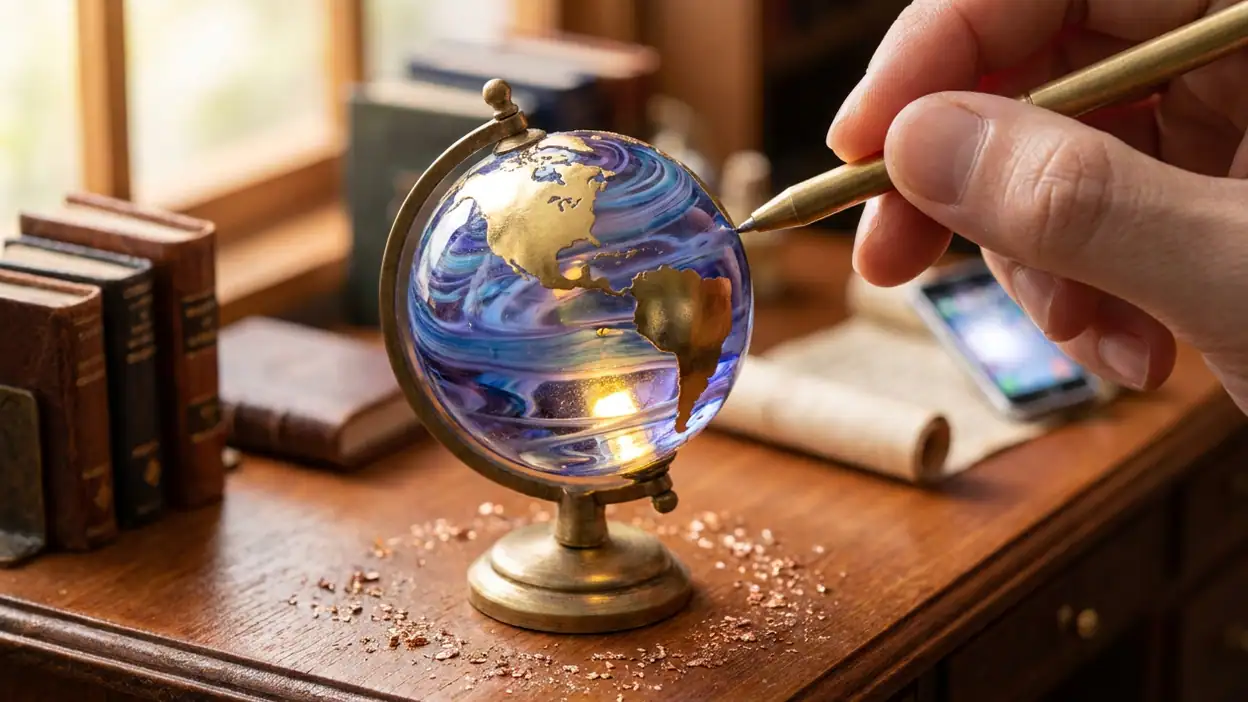
In a world where our smartphones are extensions of our identities, Google Earth stands as a digital atlas, a modern marvel that reshapes how we perceive the planet. It’s not just an app; it’s a gateway to exploration, a tool that transforms the mundane into the extraordinary. But what does it say about us, the users who keep it close at hand?
Right now, being able to virtually traverse the globe speaks volumes about our interconnected world. In an era defined by remote work and global connectivity, Google Earth is a reflection of our collective desire to bridge distances without leaving our couches. It’s about more than just seeing places; it’s about experiencing them in a way that was once only possible through travel.
The behavior that Google Earth normalizes is one of curiosity and exploration. It encourages users to engage with the world in a way that is both profound and personal. Whether you're revisiting your hometown or exploring the streets of Tokyo, every tap and swipe is an invitation to discover and understand.

Downloading and using Google Earth subtly signals a status of digital enlightenment. It’s not about showing off; it’s about having a tool that offers convenience and insight. In a similar vein to how Opera News keeps us informed or Clash Royale entertains, Google Earth enriches our knowledge, positioning itself as a staple in our digital repertoire.
For many, opening Google Earth has become a ritual, a moment of pause and reflection. It might be a quick escape during a lunch break or a nightly routine to unwind. It offers a sense of control and perspective, tapping into our need to explore while grounded by reality.
The reason people keep Google Earth close is simple: it’s a blend of utility and wonder. There’s something inherently satisfying about having the entire planet in your pocket, ready to be explored at a moment’s notice. It makes the vastness of the world feel personal and accessible.
The app’s design mirrors our cultural shift towards simplicity and elegance. With its intuitive interface and seamless navigation, it speaks to a culture that values efficiency without sacrificing depth. It’s where technology meets artistry, offering users an experience that’s both easy and enriching.
Yet, what feels both revealing and somewhat uneasy is the way Google Earth blurs the line between digital and reality. There’s an underlying tension in observing our planet from above, detached yet aware of the very real world below. It raises questions about how we interact with our environment and the implications of a world viewed through screens.
As with any pioneering app, others attempt to emulate its success. While apps like Sketchbook might capture our creativity and Bible App for Kids our spirituality, few match the global scope and impact of Google Earth. Its unique offering makes it hard for rivals to replicate without merely scratching the surface.
In the final cultural reading, Google Earth is more than a tool; it’s a cultural phenomenon. It reflects our desires, shapes our behaviors, and stands as a testament to human curiosity. It’s a digital companion that reminds us of the vastness of our world and our place within it, making the intangible touchable and the distant, near.