Gboard Review: How Google Is Turning the Keyboard Into a Control Layer
April 2, 2026
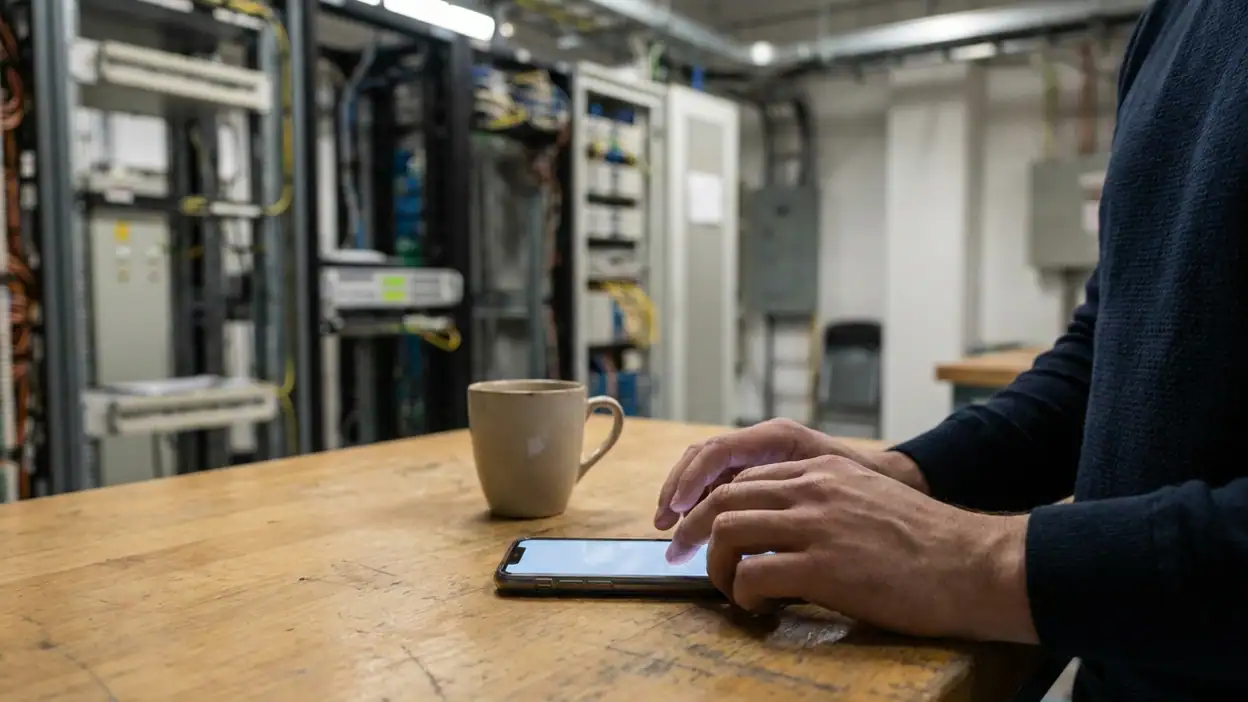
A mobile keyboard used to be judged by one simple question: can it keep up with your thumbs? That test still matters, but it no longer explains the category. After spending time with Gboard - the Google Keyboard, I came away convinced that the modern keyboard is being asked to do something much larger. It is now expected to predict intent, correct tone, translate conversation, surface information, search without leaving the current app, and increasingly connect typing to the wider intelligence of the phone.
Gboard is a useful lens because it sits directly between thought and action. It appears in messages, searches, notes, forms, comments, and work chats, often several times an hour. That position gives Google unusual influence over what a keyboard should be. Gboard is not always the quietest or most disciplined option, and some of its extra tools can make the keyboard feel crowded. But its ambition reveals the category's new baseline: a keyboard is no longer merely an input method. It is becoming a compact command center for mobile communication.
The keyboard category has outgrown its old job description
The old keyboard bargain was straightforward. Install an app, choose a theme if you care, and expect accurate taps, sensible autocorrect, fast prediction, and a layout that does not fight your hands. Those remain non-negotiable. A keyboard that misses common words or turns a quick message into a proofreading exercise has failed before its clever features matter.

Yet modern phones have changed the context around typing. People dictate messages while walking, switch between languages in the same conversation, paste addresses and passwords, add images and GIFs, search for facts mid-chat, and use voice input for paragraphs rather than single sentences. The keyboard is present for all of it. That makes it less like a digital version of a typewriter and more like a utility drawer that opens wherever communication happens.
Gboard understands this shift better than many traditional keyboard designs. Its core surface remains familiar, but the toolbar can expose translation, voice typing, clipboard history, one-handed mode, floating mode, emoji, stickers, GIFs, and search-related functions. The result is not always elegant, but it is revealing. Users now expect the keyboard to anticipate the next task, not simply the next word.
The current baseline is competence without ceremony
At the basic level, Gboard is dependable. Its key spacing is comfortable on a typical phone, the layout is easy to read, and the suggestion strip usually stays out of the way. Autocorrection is generally confident without being completely reckless, and the keyboard learns enough from repeated use to feel less generic over time. Swipe typing remains useful for short phrases, especially when the screen is large and one-handed typing is unavoidable.
That competence is easy to underestimate because a good keyboard disappears. Gboard rarely demands attention for ordinary typing, which is exactly what it should do. The haptic response is restrained on compatible devices, voice input starts quickly, and switching between letters, numbers, punctuation, and emoji does not require much thought. These are small decisions, but they determine whether a keyboard becomes part of muscle memory or an obstacle users tolerate.
Current expectations also include accessibility and flexibility. A keyboard should support multiple languages, adjustable height, alternative layouts, one-handed positioning, voice entry, and a usable clipboard. Gboard covers this territory well enough for most people. It is not a specialist tool in every area, but it has the breadth that makes one installation practical across work, travel, family chats, and casual browsing.
The important point is that users no longer compare keyboards only by typing speed. They compare how much friction each one removes from the entire act of composing something. A keyboard that helps find a restaurant, translate a sentence, or recover copied text can save more time than one that merely predicts a word a fraction faster.
Gboard's strongest signal is the toolbar
Gboard's most revealing feature is not its autocorrect engine. It is the toolbar above the keys. That strip turns the keyboard into a launch point for functions that used to require leaving the conversation. Clipboard access, translation, voice typing, emoji, GIFs, settings, and customization sit close to the place where the user's attention already is.
This design says something important about Google's view of mobile work. The company is not treating typing as an isolated activity. It sees a message as a small workspace in which users may need to retrieve a phrase, change its language, find a reaction, or insert information. The keyboard becomes the least disruptive place to provide those tools because it is already open.
In practice, this is where Gboard feels most useful. I can type a sentence, switch to translation, and continue without opening a separate app or copying text between windows. The clipboard is similarly practical for repeated snippets, addresses, and temporary pieces of research. Voice typing is not perfect, particularly with names, punctuation, or noisy surroundings, but its availability changes the scale of what feels reasonable to enter on a phone.
That toolbar also exposes Gboard's central compromise. Every additional function competes for space and attention. The keyboard wants to be invisible infrastructure, but its ambition makes it more visible. Users who only want letters and punctuation may see a collection of buttons they never asked for. Users who rely on those tools may wonder why they were ever hidden elsewhere.
The conventions Gboard follows
Gboard follows the conventions that have made mobile keyboards familiar. The bottom row keeps the space bar central, punctuation remains one tap or a gesture away, and the suggestion strip provides a predictable place for corrections and completions. The keyboard does not make users relearn basic touch behavior just to prove that it is different.
It also follows the now-standard idea that personalization should cover more than color. Users can alter height, theme, key borders, sound, vibration, and layout behavior. A floating keyboard can be useful on a large screen, while one-handed mode makes a tall phone less awkward. These options are not glamorous, but they acknowledge that there is no single correct relationship between hands, screen size, and typing posture.
Gboard also accepts that modern communication is visual. Emoji, stickers, GIFs, and symbol search are built into the same environment as ordinary text. This is not a concession to novelty; it reflects how people actually communicate. A keyboard that treats visual reactions as an afterthought feels dated, especially in group chats where a response may be a GIF or a single emoji rather than a sentence.
Its language support follows another important convention: switching languages should not feel like changing tools. Gboard supports a broad range of languages and layouts, and its multilingual behavior can be valuable for households and workplaces where conversations move between languages. The experience is not equally polished in every combination, but the expectation itself is now established. A keyboard that assumes one language per user is increasingly out of step with real life.
The convention it challenges is the border around typing
Where Gboard pushes harder is in its refusal to keep typing separate from other phone tasks. Translation inside the keyboard is the clearest example. Instead of writing, copying, opening a translation app, switching back, and pasting, users can work across languages in the same surface. Search and media tools make the same argument: communication often requires information, and the keyboard should help retrieve it.
This is a meaningful challenge to the old app model. The phone's operating system is built around separate destinations, but many tasks do not feel separate to the person performing them. A user writing, “What time does the museum close?” may need to search for the answer before sending the message. Gboard treats that as one continuous activity rather than two apps joined by a clipboard.
The challenge is not flawless. Some tools are tucked behind menus, and the toolbar can feel like a drawer where useful controls and distractions have been placed side by side. Search results or media suggestions may be more cumbersome than simply using the app's own features. Still, the direction is clear: the keyboard is becoming a contextual layer rather than a fixed panel of keys.
That shift also changes what “fast” means. Speed is no longer only words per minute. It is the number of interruptions avoided. If the keyboard lets me translate a phrase, retrieve copied text, or dictate a longer thought without leaving the current screen, it has improved the workflow even if the raw typing speed is unchanged.
Google's wider product family makes the direction obvious
Gboard makes more sense when viewed beside Google's other mobile products. Google Search has spent years turning a blank field into a gateway to answers, places, images, and actions. Google Lens treats the camera as a search surface. Files by Google turns local storage into a place for recommendations, cleanup, and discovery. Find Hub connects device location and recovery to a broader account ecosystem. Google Play services quietly supplies identity, notifications, security, and background infrastructure across apps.
These products share a philosophy: the user should not need to know which service owns a task before starting it. A photo can become a search query. A lost device can become a map action. A file manager can become a recommendation engine. Gboard applies the same logic to language. The keyboard is not just where text enters the phone; it is where a request can begin.
This is why Gboard's importance exceeds its feature list. It is a daily access point to Google's interpretation, prediction, and retrieval systems. The keyboard sees the moment before a message is sent, before a search is submitted, and before a command becomes an action. That makes it one of the most strategically valuable surfaces in the Android ecosystem.
There is a practical benefit to this integration. Gboard feels coherent with the rest of Google's mobile approach because it favors small, embedded tools over constant app switching. There is also a cost. The more a keyboard becomes a gateway to account-linked services, the more users must think about privacy, personalization, and what data is processed to make the experience feel intelligent.
The emerging standard is contextual help with restraint
The next standard for keyboards will not simply be “add more features.” It will be contextual assistance that appears at the right moment and stays quiet at every other moment. Users want a keyboard that understands whether they are writing a formal email, a quick message, a multilingual reply, or a voice note. They do not want every possibility displayed all the time.
Gboard is moving toward this standard, but it has not fully solved the presentation problem. Its tools are powerful because they are close, yet closeness can become clutter. The best future keyboard will make its intelligence feel available rather than imposed. It might surface translation when a language switch is obvious, offer a copied address when a map link is likely, or suggest a concise response without turning the suggestion strip into a sales counter.
Artificial intelligence will intensify this pressure. Generative writing tools can rewrite a sentence, adjust its tone, summarize a thought, or produce a reply. Those functions may be genuinely useful, especially on small screens, but they raise a quality question that autocorrect never had to answer. A wrong correction is annoying; a polished sentence that changes the user's meaning is more serious.
For Gboard, the emerging standard is therefore not maximum automation. It is trustworthy assistance. The keyboard should show what it changed, make reversal easy, and avoid pretending that a generated sentence is the user's own thought. Good assistance should reduce effort while preserving authorship.
Where the category still lags
Privacy remains the category's unresolved weakness. A keyboard handles some of the most personal material people type: private messages, medical questions, financial details, passwords, arguments, and unfinished thoughts. Even when processing is designed responsibly, the mere presence of a third-party keyboard introduces a level of trust that many users do not examine closely.
Gboard's connection to Google's broader ecosystem makes the question more visible, not less. Integration can produce convenience, but it also creates a larger surface for settings, permissions, account relationships, and data expectations. The controls are present, yet ordinary users should not need to become security specialists to understand what a keyboard can access, what it stores, and what leaves the device.
Consistency is another lagging area. Gboard is strong across Android, but the exact experience depends on the phone, operating system version, language, app, and available Google services. Features can appear differently or behave less reliably outside Google's preferred environment. A category that sits beneath every app should ideally feel more universal than this.
There is also a design problem with feature accumulation. Toolbars, suggestion strips, emoji panels, voice controls, clipboard prompts, and intelligent writing features all compete for the same limited screen. More capability does not automatically create a better keyboard. Without careful hierarchy, the user ends up managing the keyboard instead of using it.
Finally, prediction still has a cultural blind spot. Names, slang, dialects, mixed-language phrases, technical terms, and minority languages can receive less accurate treatment than mainstream vocabulary. A keyboard that claims to understand people must be judged by how it handles variation, not only by how well it predicts standard sentences in widely supported languages.
What this means for everyday users
For most Android users, Gboard's value is cumulative. No single feature will transform a phone, but the small savings add up. A clipboard entry prevents retyping. Voice input makes a long message manageable. Translation removes a detour. One-handed mode makes a large phone less awkward. Better suggestions reduce the number of corrections that need to be made after the thought is already gone.
That usefulness also explains why keyboard choice is personal. Some users will appreciate Gboard's broad toolset and Google integration. Others will prefer a quieter keyboard with fewer connected services, a different approach to prediction, or stronger emphasis on customization. The right choice depends less on a feature checklist than on what a person types, which languages they use, and how much they value embedded assistance.
Gboard's biggest consequence is cultural rather than technical: it raises expectations for every keyboard. Once users become accustomed to translating inside a conversation or retrieving clipboard history without leaving an app, a basic keyboard begins to feel incomplete. The category's floor rises quietly. Convenience that once seemed advanced becomes something people assume should be there.
That rising floor can be good, but it can also normalize unnecessary complexity. Users should not have to accept a busier interface or broader data relationship simply to get accurate typing. The best keyboard will make advanced features optional, understandable, and easy to ignore.
The category outlook
Gboard points toward a future in which the keyboard is less a piece of software we open and more a service woven through every text field. It will interpret context, move between languages, retrieve information, handle voice, and help shape tone. The distinction between keyboard, assistant, search box, and writing tool will continue to blur.
That future will be decided by restraint as much as intelligence. Prediction can be impressive, but trust is built through small acts: preserving the user's meaning, correcting without showing off, explaining permissions, and making every suggestion easy to reject. A keyboard has an unusually intimate relationship with its user, so convenience cannot be the only measure of progress.
Gboard is already one of the clearest examples of the category's direction. It follows the familiar rules well enough to disappear during ordinary typing, then breaks the old boundaries by bringing translation, search, media, voice, and clipboard tools into the same space. Its weaknesses are the weaknesses of the category itself: too many controls, uneven context, privacy questions, and an ongoing struggle to make intelligence feel helpful rather than intrusive.
The keyboard is no longer just the place where words are entered. It is the first layer of interaction between a person and a phone, and Gboard makes that change impossible to miss. Its real achievement is not that it types better than every alternative. It is that it shows what users now expect from typing: less switching, more context, and assistance that earns its place one keystroke at a time.