Why Facebook Still Works as a Social Neighborhood
July 26, 2026
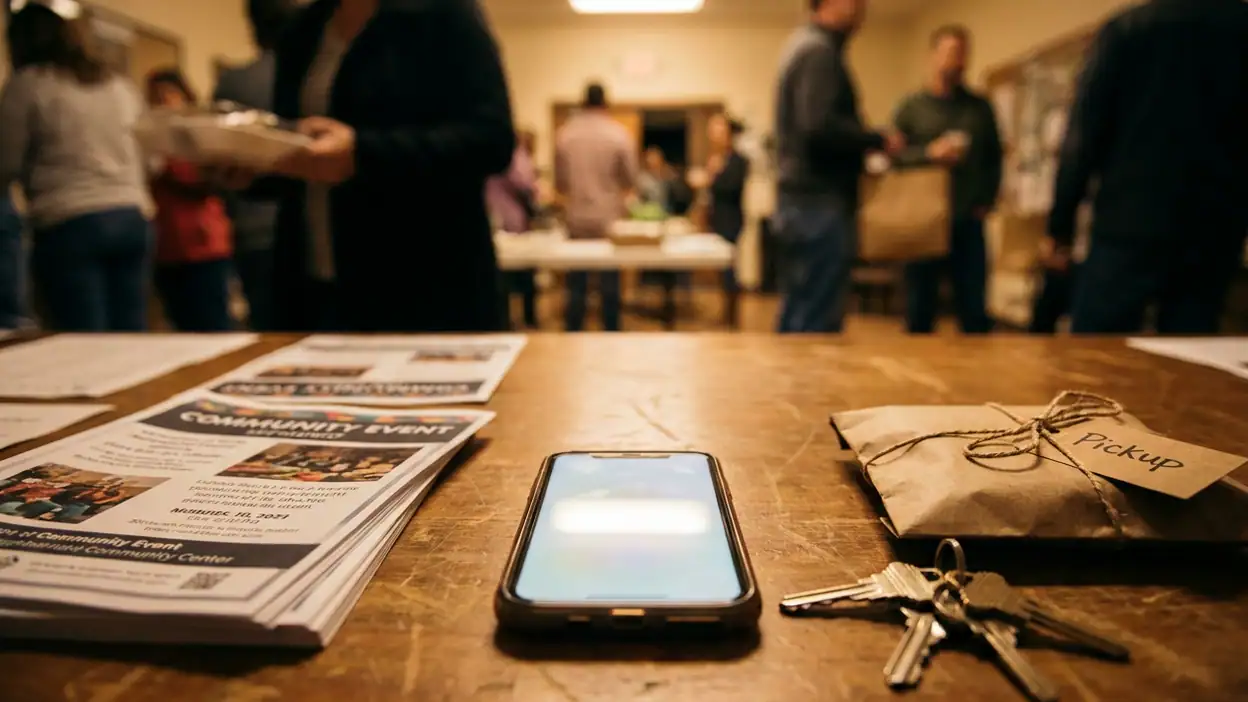
Facebook is no longer the internet's default front door, yet it remains one of the most revealing places to study what people expect from a social app. After spending time with the mobile app, I came away with a less obvious conclusion: the category is not moving toward one universal feed, but toward a collection of useful social rooms. Facebook's strength is that it still contains most of those rooms in one building. Its weakness is that the building can feel crowded, noisy, and designed around habits that younger, faster-moving platforms have already left behind.
That tension makes Facebook more interesting than a simple review score suggests. It is not the freshest social app, nor the cleanest. It is a sprawling mixture of personal updates, public video, private messaging, local listings, groups, events, news links, marketplace activity, and creator content. The experience can be uneven from one session to the next, but that unevenness is also evidence of its importance. Facebook is where the broad social category's old assumptions meet its emerging standards.
The social app is becoming a set of useful rooms
The category thesis is straightforward: people no longer expect a social app merely to show them what friends posted. They expect it to help them find people, places, answers, entertainment, opportunities, and communities with very little friction. A social network now has to function partly as a recommendation engine, partly as a local directory, partly as a media service, and partly as a private communications tool.

Facebook was built for an earlier version of that idea, but it has gradually absorbed the newer pieces. The mobile app can move from a friend's birthday reminder to a neighborhood group, then to a short video, a Marketplace listing, or an event page without asking the user to install a separate service. That breadth is not always elegant, but it gives Facebook a practical role that image-first and video-first competitors do not fully replace.
The trade-off is attention. A focused app can make one behavior feel effortless. Facebook has to negotiate between many behaviors, each with different rhythms and expectations. A group discussion wants context. A short video wants momentum. Marketplace wants trust and clear logistics. An event needs dates, location, and attendance signals. The app's central challenge is making these modes feel intentional rather than piled together.
The baseline has moved beyond posting and scrolling
The current baseline for a social app is much higher than a chronological feed with a comment box. Users expect fast loading, reliable media playback, straightforward privacy controls, useful search, personalized discovery, and an obvious way to move from seeing something to doing something. They expect vertical video to begin quickly, communities to be easy to join, and messages to remain available across devices. They also expect the app to understand the difference between a close friend, a public creator, a local seller, and a stranger in a group.
Facebook meets many of these expectations, though not always with the same polish. Its feed is highly personalized, video is deeply integrated, and the app provides a broad set of controls for audiences, notifications, and group participation. Search can lead to people, posts, pages, groups, places, and listings, which is a more useful model than treating every query as a hunt for an account.
But the baseline now includes restraint. Users expect an app to explain why content appears, reduce repetition, and give them meaningful control over recommendations. They want fewer dead ends and less uncertainty about whether a post is from someone they know, someone they follow, or a page the system selected. Facebook's interface often gives them the tools, but the experience still requires too much interpretation.
That is the first major category shift: personalization is no longer impressive by itself. The standard is useful personalization with visible purpose. A feed should not merely know what might hold attention. It should help users understand what deserves attention and why.
Facebook's strongest signal is utility that survives outside the feed
The strongest signal from Facebook is not its video feed. Instagram, TikTok, and other entertainment-led platforms have made faster, more visually coherent discovery feel normal. Facebook's more durable advantage is the amount of activity that happens beyond passive scrolling. Groups, events, Marketplace, and local recommendations give the app a reason to open even when a user has no interest in browsing a general feed.
I noticed this most clearly in groups. A well-run group can feel like a living noticeboard with memory. Questions receive practical answers, old posts remain searchable, and recurring problems can be solved by people who share a place, hobby, profession, or life stage. That is a different kind of stickiness from endless video. It comes from accumulated context.
Marketplace makes the same point in a more transactional way. The experience is far from perfect, but the density of nearby listings gives Facebook a local usefulness that a purely social network cannot easily reproduce. A user can discover an item, compare prices, inspect seller history, and arrange a handoff within the same broad ecosystem. The app becomes valuable because it connects online attention to offline action.
This is where Facebook still defines a category standard: social products should not measure success only by time spent. They should also help people complete real tasks. A platform that helps someone find a used desk, join a running club, attend a school event, or solve a repair problem has a stronger relationship with its users than one that only supplies an endless stream of clips.
The conventions Facebook follows, for better and worse
Facebook follows nearly every established convention of the modern social app. The home feed is ranked rather than strictly chronological. Video is prominent. Reactions and comments turn every post into a small public performance. Notifications pull users back into unfinished conversations. Stories and short-form video borrow the temporary, full-screen rhythm popularized by newer platforms. Suggested groups, pages, people, and posts extend the network beyond the user's existing circle.
These conventions work because they reduce learning time. A person moving between social apps already knows how to swipe through video, tap a reaction, share a post, or open a comment thread. Familiarity matters, especially for an app used by people with very different levels of technical confidence.
Yet familiarity can become inertia. Facebook's feed frequently mixes material that demands completely different kinds of attention. A family update, an advertisement, a heated public argument, a product listing, and an automatically selected video may appear within seconds of one another. The app knows how to rank each item, but it does not always know how to create a coherent session.
The result is a familiar social convention taken to its extreme: one feed becomes the universal container. That model made sense when the main question was what friends had posted since the last visit. It is less convincing now that social apps contain entertainment, commerce, local information, professional identity, and private communities.
The convention Facebook challenges is the idea that social value must be public
Facebook's most important challenge to the category is not a flashy interface feature. It is the continued importance of semi-private and local participation. Groups, event pages, neighborhood discussions, and private messaging show that social value often comes from bounded spaces rather than public reach.
That matters because much of social media has been organized around visibility. Creators compete for distribution, users learn to package ordinary moments for an audience, and recommendation systems reward content that travels beyond its original context. Facebook still contains that machinery, but its most useful experiences often work in the opposite direction. A post can be valuable precisely because it reaches the right fifty people instead of a million strangers.
In practical use, this changes how people behave. A group member may ask a blunt question that would never make sense as a polished public post. A local event can gather interest without becoming content. A Marketplace conversation can remain transactional. The app's social graph is not only an audience graph; it is also a network of trust, proximity, and shared circumstance.
This is a convention worth watching across the category. The next generation of social products may not abandon public feeds, but they will increasingly treat private circles and purposeful communities as first-class destinations. The public square remains important. It is simply no longer the whole city.
Related products reveal where the pressure is coming from
Instagram shows how much users now expect visual consistency and creator-led discovery. Its interface is more tightly organized around images, short video, and identity as presentation. Compared with it, Facebook feels more tolerant of mess. That can make Facebook less exciting, but it also lets the app support conversations and tasks that do not photograph well.
Facebook Lite exposes another expectation: access should not depend on a powerful phone, a generous data plan, or a fast connection. Its reduced footprint and simpler approach underline how much of the social category is still shaped by hardware assumptions. The full Facebook app can feel heavy because it tries to be many products at once. Lite is a reminder that the basic social promise should remain available even when the device is modest.
Threads represents the opposite pressure. It narrows the experience around text-led public conversation and quick reactions. Its appeal comes partly from removing some of the clutter that has accumulated in broader social platforms. The lesson for Facebook is not that it should become a text app. It is that users appreciate a clear reason for opening an app, and they notice when every surface tries to serve every purpose.
Bigo Live and Likee point toward more performative, real-time, and highly visual forms of participation. Their communities are built around live presence, short video, discovery, and creator interaction. They make Facebook's general-purpose feed feel slower and less emotionally immediate, while also showing the risks of a category driven entirely by velocity: moderation pressure, repetitive formats, and a constant demand to perform.
Taken together, these related products create a useful map. Instagram raises the bar for visual polish. Facebook Lite raises the bar for accessibility. Threads raises the bar for focus. Live-streaming and short-video platforms raise the bar for immediacy. Facebook remains broad enough to contain many of these expectations, but breadth alone is no longer a convincing answer.
The emerging standard is context, not just personalization
The category's emerging standard is context-aware social design. Users need to know what kind of interaction they are entering, what audience is present, and what action the app expects next. A community question, a creator broadcast, a local sale, and a friend's photo should not all feel like interchangeable cards in a single river.
Facebook is already close to this future in its separate destinations. Groups have a different purpose from Marketplace. Events have a different structure from Reels. Messenger conversations do not need the same ranking logic as public posts. The problem is that the mobile experience still makes users cross too many boundaries without clearly marking them.
A better social app would preserve the convenience of one account and one network while giving each mode its own rhythm. It would let people enter a local mode when they need local information, a community mode when they want discussion, and an entertainment mode when they want discovery. Recommendations could remain personalized, but the user would have more say over the kind of attention being requested.
This is also where trust becomes part of the interface. Context tells users how seriously to take a claim, how much personal information to share, and whether a response should be public or private. Clear labels, better source signals, and more predictable audience controls are not administrative extras. They are basic social infrastructure.
Where the category still lags
Despite years of refinement, social apps remain surprisingly poor at helping users manage the cost of participation. Notifications are still often optimized for return visits rather than relevance. Search can surface too much without explaining what is current, credible, or connected to the user's actual need. Recommendation systems are good at finding engagement patterns, but less good at recognizing fatigue, repetition, or emotional overload.
Facebook makes these problems visible because it contains so many kinds of activity. A user may want a quiet look at family updates but receive a crowded mixture of public recommendations and promotional content. Someone looking for a local answer may have to sort through old posts, duplicated questions, and unrelated suggestions. The app provides controls, but the burden of organization remains with the user.
Moderation is another unresolved gap. Large communities need rules, enforcement, appeals, and tools that ordinary administrators can understand. Facebook's scale makes this difficult, but scale cannot be an excuse for making users navigate unclear boundaries. The category still has not found a satisfying balance between open participation and dependable safety.
There is also a design lag around identity. Users increasingly move among personal, professional, creator, and community roles, yet social apps still tend to treat identity as a single profile with a single reputation. Facebook's pages, groups, profiles, and professional tools partly address this, but the mental model remains complicated. People need more control over which version of themselves is visible in which context.
The consequence for users is a choice between breadth and calm
For users, the category's direction creates a practical compromise. Broad platforms are useful because they reduce the number of separate apps needed for everyday life. They are also tiring because every visit can become a negotiation with recommendation systems, notifications, advertising, and competing social expectations.
Facebook is particularly good for people whose social lives are distributed across age groups, locations, and communities. It can connect relatives, clubs, businesses, local sellers, event organizers, and interest groups in one place. That network density is difficult to recreate elsewhere. If your goal is to find a specific community or practical local information, Facebook may still be more useful than a trendier alternative.
But users who want a clean stream, a tightly defined creative identity, or fast-moving entertainment may find the app diffuse. The product asks you to curate your own experience more than a focused competitor does. Muting, unfollowing, adjusting notification settings, choosing feeds, and leaving groups are not optional housekeeping; they are part of using the app well.
That is an important shift in the meaning of convenience. Having everything in one place is convenient only if the user can still find the thing they came for. Otherwise, abundance becomes friction disguised as choice.
The outlook: Facebook's future depends on making its rooms legible
Facebook does not need to win every social format to remain relevant. It needs to make its existing advantages easier to understand and easier to enter. Groups should feel like communities rather than message archives. Marketplace should make trust and logistics more visible. Events should connect discovery with attendance. Video should be entertaining without overwhelming the rest of the product. The feed should become a useful starting point, not an unavoidable maze.
The wider category is heading toward a split between public discovery and purposeful participation. Public video will continue to compete for attention, but communities, local networks, private conversations, and real-world coordination will determine whether a social app has lasting value. Facebook is unusually well positioned for that split because it already owns so many of the necessary connections.
Its risk is not simply that people will leave. The greater risk is that they will keep the app installed but stop believing it is the best place to begin. A platform can survive reduced novelty if it remains useful. It cannot survive indefinitely as a cluttered archive of features that users visit only out of habit.
After testing the mobile app, I would not describe Facebook as the most enjoyable social experience, and I would not recommend it as the only one. I would describe it as the clearest working model of where social apps came from and where they still need to go. Its future will be decided less by another feed adjustment than by whether it can turn its enormous range of social spaces into a calmer, more intelligible system. Facebook remains valuable because it connects real life at scale. The next standard is making that connection feel deliberate.