How CapCut Turned Mobile Video Editing Into a Race for Attention
May 5, 2026
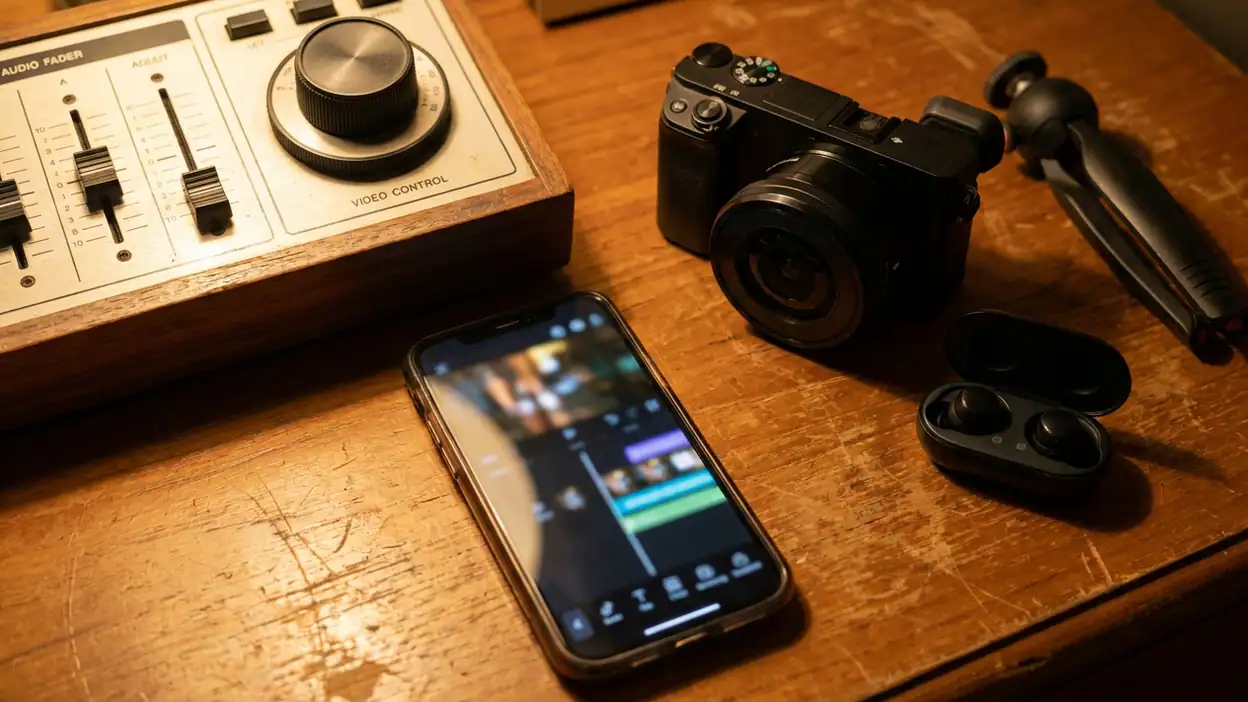
CapCut has made a slightly uncomfortable truth hard to ignore: mobile video editing is no longer mainly about cutting footage. It is about turning ordinary clips into publishable moments with a recognizable pace, sound, caption style, and visual identity before the user loses interest. After spending time with CapCut - Video Editor, I came away thinking less about whether it is the best editor in isolation and more about what its design says about the category. The modern standard is shifting from control to momentum.
That distinction matters. Traditional editors ask users to bring an idea, gather assets, make a sequence, and polish it. CapCut increasingly meets users halfway, suggesting formats, effects, templates, rhythms, and automated treatments that help an idea take shape quickly. Its success is not just a story about a popular app. It is evidence that people now expect a video editor to understand the culture of short-form video, not merely provide a timeline.
The mobile editor is becoming a publishing system
The old category thesis was simple: a good mobile editor brought desktop-style tools to a smaller screen. It needed trimming, splitting, transitions, filters, music, text, export controls, and perhaps a few advanced adjustments. That baseline still matters, but it no longer explains why some apps become habits while others remain occasional utilities.

Users are not opening these apps only to repair footage. They are opening them to make something that already feels native to TikTok, Instagram Reels, YouTube Shorts, or a private group chat. The finished video needs to move quickly, communicate without sound, fit a vertical frame, and look intentional even when it was shot in a kitchen, on a bus, or during a rushed weekend trip. The editor has become part of the publishing process.
CapCut understands this change at a structural level. Its interface does not treat editing as a neutral technical task. It places creative decisions close to the moment of import: templates, effects, captions, audio, overlays, speed changes, and visual treatments are presented as ways to produce a recognizable result. That can feel busy, but the busyness reflects the real job users are asking the app to do.
The category baseline has therefore expanded. A credible mobile editor now needs a friendly timeline and dependable export, but it also needs fast captioning, aspect-ratio flexibility, layered media, audio control, background removal, keyframe-style animation, and enough visual presets to help a non-editor avoid a blank canvas. Increasingly, it is expected to use automation without making the user feel replaced.
CapCut's strongest signal is the way it reduces the distance between raw footage and a culturally legible finished clip. Import a few videos and the app quickly presents routes forward. A template can impose timing. Auto captions can turn speech into structure. Beat-aware editing can make a sequence feel deliberate. Effects can supply a visual accent that would otherwise require patient manual work.
This is not the same as making every edit good. It is making the first acceptable edit arrive quickly. That is a more powerful promise for a casual creator than an enormous toolbox. In practice, I found myself judging CapCut by how little friction stood between a rough idea and a clip I would actually consider sharing. The answer was often surprisingly little.
The app's strongest product decision is its understanding of creative momentum. A user who begins with a blank timeline can easily stall, especially on a phone where precise manipulation is tiring. CapCut keeps offering a next move. Add a sound. Try a style. Generate captions. Change the speed. Apply a transition. Use a template. These prompts are not all equally valuable, but they prevent the editor from becoming a silent workbench.
That approach also explains why CapCut feels culturally current even when individual effects are disposable. Its value is not tied to one filter or transition. It is tied to a steady awareness of how short-form video is being made and watched. Trends change rapidly, and an editor that reflects that pace feels more useful than one whose feature list is technically impressive but socially frozen.
CapCut still follows many conventions established by earlier mobile editors. The timeline remains the central organizing metaphor. Media is arranged in tracks, clips can be trimmed and split, audio can be layered, text can be positioned over footage, and the project is exported as a finished file. Users who have tried VivaVideo - Video Cut & Editor or KineMaster - Video Editor will recognize the broad grammar immediately.
That continuity is important because editing has learned a set of familiar gestures. Dragging an edge changes duration. Tapping a clip reveals tools. Pinching and repositioning adjusts scale and placement. A playhead marks the current moment. CapCut does not throw away these conventions in pursuit of novelty. It makes them more approachable, then surrounds them with faster routes to a result.
It also follows the familiar freemium pattern. The core experience is accessible, while some assets, effects, templates, or export-related conveniences may sit behind a premium boundary. That structure is now normal in the category, though it can make the creative process feel less predictable. Users may begin with a free experiment and discover that the specific look they want depends on a paid element.
Where CapCut challenges convention is in the assumption that a serious editor must begin with manual assembly. It treats automation and templates not as secondary shortcuts but as central creative surfaces. That is a meaningful change. Older editing software often presents automation as a bonus for beginners, while advanced users are expected to work directly on the timeline. CapCut suggests that even experienced creators may prefer a fast generated starting point, provided they can take control afterward.
This hybrid model is visible in the relationship between templates and manual editing. A template can provide a sequence, timing, and visual logic, but the user can still replace clips, alter text, adjust audio, and refine the pacing. The app is not simply asking people to accept a finished preset. It is using the preset as scaffolding.
That scaffolding changes the meaning of skill. In a conventional editor, skill is often measured by how precisely someone can build a sequence from scratch. In CapCut's environment, skill also means knowing when to accept a generated structure, when to break it, and how to make it feel personal. The app does not eliminate taste. It moves taste later in the process, after the first draft already exists.
Related products make the shift easier to see. KineMaster still speaks strongly to users who want direct control over layers, timing, and compositing. Its appeal is the confidence that every important decision can remain in the user's hands. VivaVideo is closer to the accessible, effect-led side of the market, emphasizing quick transformations and familiar social-video polish. Both approaches remain valid, but neither defines the entire new expectation on its own.
YouTube provides another useful contrast. YouTube's editing tools, especially for Shorts, are closely connected to distribution and audience behavior, but its editing environment is not trying to be a full creative playground in the same way. The platform wants users to publish inside its ecosystem. CapCut is more flexible as a creation layer, even though its design clearly understands that the final destination is usually a social feed.
Google TV and MX Player sit at the opposite end of the comparison. They are primarily about consuming video rather than shaping it, so their success depends on discovery, playback reliability, format support, and a clean viewing experience. Their presence in the wider video category is a reminder that mobile video is not one market with one set of priorities. Yet the boundary between watching and making is becoming more porous: viewers increasingly expect tools that help them clip, remix, caption, and share what they see.
Across these products, the evidence points toward a new standard: mobile video software must be context-aware. A player should remember what and how people watch. A platform should understand where a clip will be published. An editor should know that vertical framing, captions, music timing, and fast sharing are not optional extras for a large part of its audience.
CapCut's contribution is to make this context visible inside the editing workflow. It does not merely provide a canvas. It provides a sense of the finished social object. The user is encouraged to think in terms of hooks, beats, overlays, visual changes, and retention. Even without explicitly discussing audience analytics, the app's design reflects a world in which a video has to earn attention almost immediately.
That focus can make the app feel unusually sticky. Once users have built a personal library of favorite sounds, effects, caption treatments, and recurring formats, opening CapCut becomes part of a routine. The app is not only where projects are stored. It becomes where a creator's visual habits are reinforced. A successful edit creates the desire to make another one, and the next project begins with more confidence.
Still, category progress has costs. CapCut can feel crowded, especially when the interface presents many creative options at once. A beginner may appreciate the abundance on one day and feel lost in it on another. The app is optimized for possibility and speed, but those qualities can compete with calm. There are moments when I wanted a clearer sense of hierarchy: what should I do first, which tools matter for this particular clip, and which options can safely be ignored?
The app also inherits the instability of trend-driven design. Effects and templates are useful partly because they feel current, but current means temporary. A feature that helps a video look native today may make it look dated later. CapCut can accelerate production, yet it can also encourage visual sameness when many users select from the same popular structures.
This is the central tension in template-led editing. Templates remove the fear of the blank page, but they can flatten authorship. The best use of CapCut is not to accept a preset unchanged. It is to use the preset for rhythm or structure, then introduce decisions that belong to the footage: an unusual pause, a quieter transition, a caption placed for emphasis, or a cut that refuses the expected beat.
Automation creates a similar tension. Auto captions are enormously practical, especially for short videos watched without sound. Background removal and smart effects can save time that would otherwise be spent on tedious masking. But automated results still need inspection. Captions can mishear words, timing can feel mechanical, and an effect that looks impressive in a preview can distract from the subject once the full sequence plays.
That is where the category still lags. Mobile editors have become very good at adding possibilities, but they are less consistent at helping users make judgments. They can suggest a transition, generate text, or apply a look. They are not yet equally good at explaining why a cut is weak, why the opening is slow, why a caption is unreadable, or why the music overwhelms the voice.
The next stage of mobile editing should be more editorial, not merely more automated. Users need tools that can recognize a long pause, flag inconsistent audio levels, suggest a tighter opening, or show how a video will read on a small screen. These features should remain suggestions rather than invisible corrections. The goal is not to turn every clip into the same optimized product. It is to make the consequences of creative choices easier to see.
CapCut points toward that future, but it does not fully solve it. Its strengths are immediate and tactile: a fast preview, an accessible effect, a useful template, a caption track that appears with little effort. Its weaknesses are harder to notice because they emerge after the excitement of making begins. The more options an app provides, the more responsibility it has to help users understand the result.
There is also a growing question around ownership and portability. A creator may build a project around a particular template, sound, or effect, only to discover that the finished work behaves differently outside the app or on another platform. Editors have traditionally been judged by export quality, but modern users also need confidence that their work is not trapped inside a single creative ecosystem.
For users, the consequence is both liberating and demanding. It is easier than ever to produce a polished clip without formal editing training. A phone, a handful of recordings, and a few minutes can be enough. But the abundance of polished clips raises the standard for what feels memorable. Basic competence is no longer scarce. Point of view is.
CapCut makes that reality tangible. It can give a rough recording pace, polish, and structure, but it cannot decide what is worth saying. It can make a travel montage feel energetic, yet it cannot supply the one detail that makes the trip personal. It can synchronize images to music, but it cannot replace the judgment involved in leaving one image on screen a little longer.
That is why I would not describe CapCut simply as an easy alternative to desktop editing. It is a distinct kind of tool, built around the expectations of a feed-based culture. It values speed, recognizability, remixability, and immediate visual feedback. Manual control remains available, but the app's deeper idea is that creation should begin with a usable shape rather than an empty timeline.
The outlook for the category is clear. Mobile editors will continue moving toward assisted creation, tighter links with publishing platforms, smarter captioning, more responsive templates, and tools that adapt to different aspect ratios and audiences. The strongest products will not just add more effects. They will understand the relationship between footage, sound, text, attention, and destination.
At the same time, the category will need to protect room for deliberate work. A good editor should help users move fast without making every video feel assembled from the same kit. It should reward experimentation, preserve control, and make automation transparent enough that creators can correct it. The next competitive advantage may be restraint: knowing when not to add another effect, prompt, or recommendation.
CapCut - Video Editor is important because it captures the category at this turning point. It respects the old language of tracks and cuts, but it treats templates, automation, and social context as first-class parts of editing. That combination explains both its appeal and its limitations. It gets users moving faster than most traditional mobile workflows, yet it sometimes leaves them to decide what deserves to remain.
My conclusion is less about naming a winner than recognizing the new contract between editor and user. People now expect mobile video software to help them reach a finished, shareable idea quickly. CapCut meets that expectation with unusual confidence. The category's next challenge is to make that speed serve originality rather than replace it. The best mobile editor will not be the one that does the most for us. It will be the one that helps us make better decisions while keeping the final voice unmistakably our own.